
 EN
EN
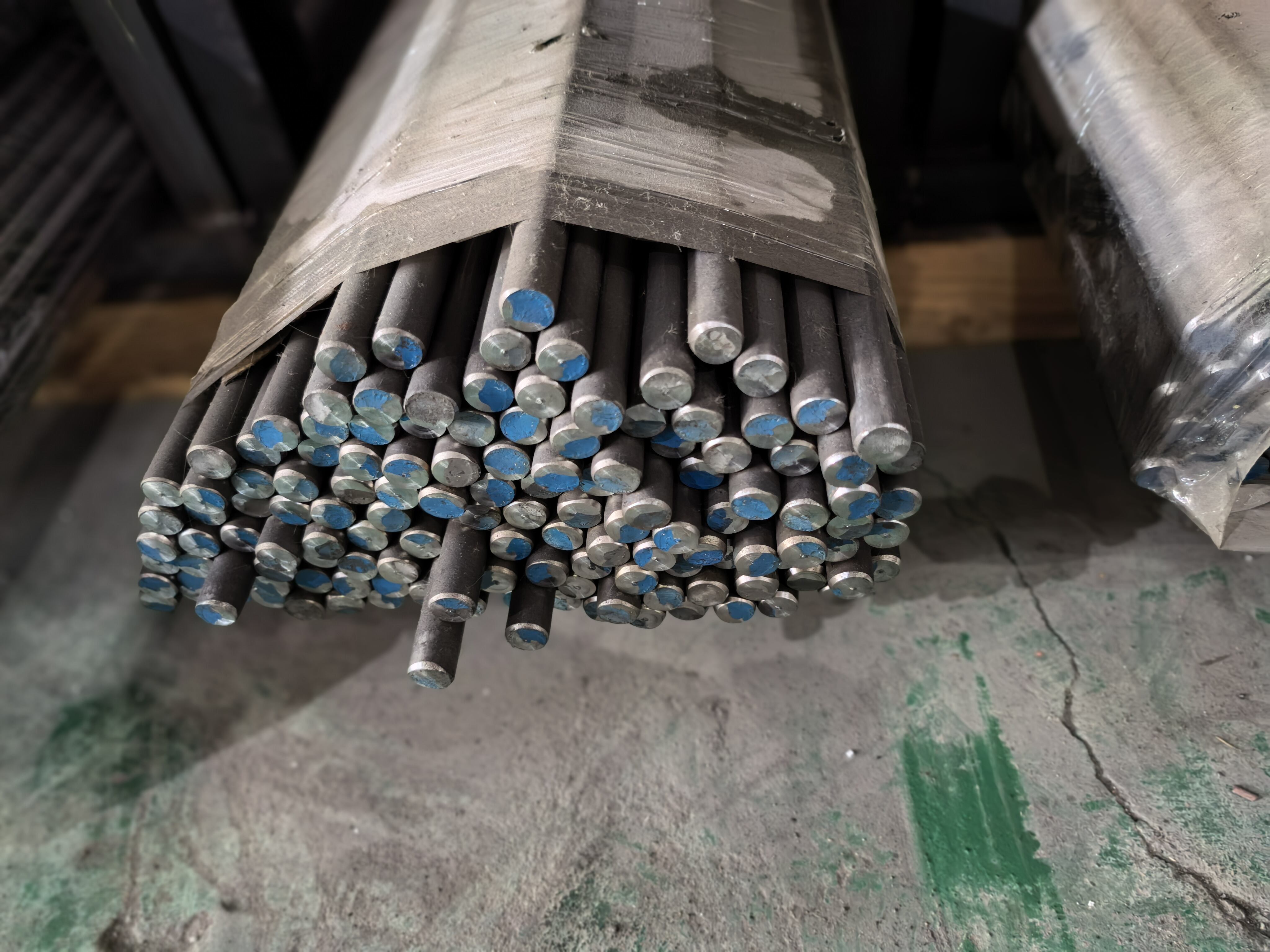
When engineers and procurement managers search for a reliable source of materials for fastener production, the question of selecting the right high-tensile steel rods manufacturer becomes paramount. Fasteners form the backbone of countless industrial assemblies, from automotive components to construction frameworks, and the steel rods used in their production must meet exacting standards for strength, durability, and consistency. Identifying a manufacturer capable of supplying high-tensile steel rods with verified mechanical properties, precise dimensional tolerances, and proven batch consistency directly impacts production efficiency, product reliability, and long-term cost management.
Fastener production demands specialized raw materials that can withstand high-stress applications while maintaining dimensional accuracy throughout cold heading, thread rolling, and heat treatment processes. High-tensile steel rods serve as the primary feedstock for manufacturing bolts, screws, studs, and other critical fastening components used across automotive, aerospace, machinery, and infrastructure sectors. The selection of a manufacturing partner involves evaluating not just material grade compliance but also production capabilities, quality control systems, supply chain reliability, and technical support throughout the procurement lifecycle. This comprehensive examination explores what fastener manufacturers should prioritize when identifying high-tensile steel rods suppliers and how to evaluate manufacturers against industry-specific requirements.
Understanding High-Tensile Steel Rod Requirements for Fastener Manufacturing
Mechanical Property Specifications Critical to Fastener Performance
The mechanical properties of high-tensile steel rods directly determine the performance characteristics of finished fasteners. Tensile strength typically ranges from 600 MPa to over 1200 MPa depending on the grade selected, with yield strength proportionally scaled to ensure proper elasticity under load. Fastener manufacturers must specify minimum tensile and yield strength values that align with the intended application grade, whether for standard industrial fasteners or specialized high-performance components subjected to extreme stress conditions. Elongation percentages indicate the material's ductility, essential for cold heading operations where the steel must deform without cracking during the forming process.
Beyond basic strength parameters, hardness uniformity across the rod's cross-section ensures consistent machining behavior and predictable heat treatment response. Manufacturers producing high-tensile steel rods should provide certified mill test reports documenting tensile tests, hardness profiles, and impact resistance measurements conducted according to international standards such as ASTM, ISO, or JIS. The chemical composition must be tightly controlled, with carbon content, manganese, chromium, and alloying elements balanced to achieve the target strength while maintaining weldability and preventing brittleness. Fastener producers should verify that suppliers conduct spectroscopic analysis on each production batch to confirm compositional consistency.
Surface Quality and Dimensional Precision Standards
Surface defects such as seams, laps, scratches, or decarburization layers can compromise fastener integrity by creating stress concentration points that propagate into cracks during service. High-quality high-tensile steel rods exhibit smooth, clean surfaces free from scale, rust, or metallurgical imperfections that could transfer to the finished fastener. Manufacturers should employ continuous inspection systems including eddy current testing or magnetic particle inspection to detect subsurface anomalies before shipment. The surface finish affects not only visual quality but also the effectiveness of subsequent coating processes and corrosion resistance of the final product.
Dimensional tolerance control ensures that high-tensile steel rods feed smoothly through automated fastener production equipment without causing jams, misalignment, or excessive tool wear. Diameter tolerances typically held to within ±0.05mm or tighter enable consistent cold heading performance and reduce scrap rates. Straightness specifications prevent material handling difficulties and ensure uniform contact with forming dies. Fastener manufacturers operating high-speed production lines require rods supplied in coil form with consistent winding tension and minimal camber, while those using bar stock need precise length cutting and bundling that facilitates automated feeding systems.
Material Traceability and Certification Requirements
Complete material traceability from melt batch through finished rod enables fastener manufacturers to maintain quality documentation required by automotive OEMs, aerospace certification bodies, and construction code authorities. Reputable manufacturers of high-tensile steel rods implement heat numbering systems that uniquely identify each production lot and link it to chemical analysis results, mechanical testing data, and processing parameters. This traceability becomes critical when fastener failures occur in the field, allowing rapid identification of affected batches and targeted recalls rather than broad market withdrawals.
Certification documentation should include mill test certificates conforming to EN 10204 3.1 standards, providing independent verification of material properties. For applications in regulated industries, third-party inspection reports from recognized testing laboratories add an additional layer of quality assurance. Fastener manufacturers should establish supplier qualification protocols that verify the manufacturer's ability to maintain batch-to-batch consistency, conduct regular audits of production facilities, and maintain documented quality management systems certified to ISO 9001 or equivalent standards. Digital traceability systems that encode batch information directly onto rod bundles or coils through QR codes or RFID tags streamline inventory management and quality control processes.
Evaluating Manufacturer Capabilities and Production Infrastructure
Steelmaking and Rolling Process Technologies
The production methodology employed by a high-tensile steel rods manufacturer fundamentally influences material consistency and mechanical property reliability. Electric arc furnace steelmaking combined with ladle refining and continuous casting produces cleaner steel with lower inclusion content compared to traditional methods. Vacuum degassing further reduces hydrogen and nitrogen levels, minimizing internal porosity that could compromise fatigue resistance in high-stress fastener applications. Manufacturers investing in modern refining technologies demonstrate commitment to quality that translates into superior product performance.
Hot rolling parameters including reduction ratios, rolling temperatures, and cooling rates determine the final microstructure and grain size distribution within high-tensile steel rods. Controlled rolling schedules optimize austenite grain refinement, enhancing both strength and toughness simultaneously. Manufacturers utilizing computer-controlled rolling mills achieve tighter dimensional tolerances and more uniform mechanical properties compared to manually operated facilities. Cold drawing operations following hot rolling further refine surface finish and dimensional precision while introducing beneficial residual compressive stresses that improve fatigue life in finished fasteners.
Heat Treatment and Quality Control Infrastructure
Many high-tensile steel rods require normalized, annealed, or quenched-and-tempered conditions to achieve specified mechanical properties and optimal cold heading characteristics. Manufacturers equipped with continuous heat treatment furnaces featuring precise atmosphere control and programmable cooling cycles deliver superior metallurgical consistency compared to batch processing methods. Proper heat treatment eliminates internal stresses from prior processing, refines grain structure, and produces uniform hardness profiles that facilitate subsequent fastener manufacturing operations.
Comprehensive quality control laboratories distinguish leading manufacturers from commodity suppliers. Capabilities should include tensile testing machines calibrated to international standards, optical emission spectrometers for compositional analysis, hardness testing equipment covering Rockwell, Brinell, and Vickers scales, and metallographic preparation facilities for microstructural examination. Advanced manufacturers employ statistical process control methodologies that monitor production variables in real time, triggering automatic adjustments when trends indicate potential deviation from specifications. Fastener producers benefit from partnering with manufacturers who share quality data transparently and collaborate on continuous improvement initiatives.
Production Capacity and Supply Chain Reliability
Evaluating a manufacturer's production capacity relative to your procurement volume prevents supply disruptions that could halt fastener production lines. Manufacturers operating multiple rolling mills with redundant capacity provide greater supply security than single-line operations vulnerable to equipment failures or maintenance shutdowns. Annual production volumes in the tens of thousands of tons indicate established market presence and economies of scale that support competitive pricing without sacrificing quality.
Supply chain reliability extends beyond production capacity to encompass raw material sourcing stability, inventory management practices, and logistics capabilities. Manufacturers maintaining strategic inventory buffers of commonly ordered grades and sizes can respond rapidly to urgent orders, while those operating on strict make-to-order schedules may introduce lead time variability. Geographic proximity to your manufacturing facilities reduces transportation costs and transit times, though this must be balanced against the technical capabilities and quality reputation of distant suppliers. Established manufacturers of high-tensile steel rods typically maintain distribution networks or partnership agreements with logistics providers experienced in handling steel products to minimize damage during transportation.
Technical Specifications Matching Fastener Application Requirements
Grade Selection for Different Fastener Classes and Applications
Fastener manufacturers must match high-tensile steel rods grades to the mechanical property requirements of specific fastener standards such as ISO 898-1, ASTM A574, or SAE J429. Standard automotive fasteners typically utilize medium carbon steel grades like AISI 1035, 1038, or 1045 that balance strength, ductility, and cost-effectiveness. High-performance applications in automotive powertrains or structural connections may require alloy steel grades such as 40Cr, 35CrMo, or 42CrMo that achieve higher tensile strengths through alloy element additions and heat treatment optimization.
The selection process considers not only the finished fastener's strength class but also the manufacturing operations it will undergo. Grades intended for cold heading must exhibit sufficient ductility to withstand severe plastic deformation without cracking, typically requiring lower carbon content and careful microstructural control. Materials destined for high-strength bolts subjected to quenching and tempering should contain adequate hardenability alloy content to achieve through-hardening in the required diameter range. Manufacturers producing high-tensile steel rods across multiple grade families provide fastener producers with single-source convenience while ensuring compatible quality standards across different material specifications.
Form Factor Optimization for Production Efficiency
High-tensile steel rods supplied in coil form versus straight bar lengths each offer distinct advantages depending on fastener manufacturing equipment and production volumes. Coiled rods weighing one to three tons per coil enable continuous feeding through high-speed cold heading machines, minimizing downtime for material changes and reducing scrap from cut-off ends. The coiling process requires careful tension control and proper winding geometry to prevent tangling or spring-back issues during unwinding at the fastener plant.
Bar stock cut to specific lengths suits lower-volume production or manual feeding operations, with typical lengths ranging from three to six meters depending on handling equipment capabilities. Precision cut-to-length services from the high-tensile steel rods manufacturer eliminate secondary processing steps at the fastener plant, though at a premium price compared to standard mill lengths. Some manufacturers offer straightening and polishing services that enhance surface quality beyond standard hot-rolled finish, particularly valuable for applications requiring decorative appearance or superior corrosion resistance. The optimal form factor decision balances material cost, handling convenience, production line compatibility, and scrap minimization considerations specific to each fastener manufacturing operation.
Special Processing and Value-Added Services
Beyond standard high-tensile steel rods production, leading manufacturers offer value-added processing services that reduce fastener manufacturers' operational complexity. Spheroidize annealing treatments soften the steel structure specifically for cold heading operations, enabling more severe forming ratios and extending die life compared to as-rolled material. Phosphate coating or copper plating applied at the rod manufacturing stage improves lubricity during cold forming and provides temporary corrosion protection during storage and transportation.
Custom chemical composition modifications within standard grade families allow fine-tuning of material properties for proprietary fastener designs or specialized performance requirements. Manufacturers equipped with flexible steelmaking operations can adjust carbon, manganese, chromium, or microalloying element levels to optimize specific characteristics such as case hardenability depth, core toughness, or machinability. Technical collaboration between the rod manufacturer's metallurgical team and the fastener producer's engineering department often identifies property optimization opportunities that enhance product performance or reduce manufacturing costs through improved process efficiency.
Strategic Considerations in Manufacturer Selection and Partnership Development
Cost Structure Analysis Beyond Unit Price
While per-ton pricing of high-tensile steel rods constitutes the most visible cost element, comprehensive cost analysis must account for total ownership expenses including quality-related costs, logistics, inventory carrying charges, and supply disruption risks. Lower-priced material from marginal suppliers often incurs hidden costs through higher scrap rates, increased tool wear, quality claim resolution efforts, and production downtime from specification non-conformances. Premium manufacturers may command higher nominal prices but deliver superior value through consistent quality that reduces defect rates and enables faster production speeds.
Logistics costs vary significantly based on manufacturer location, shipment frequency, and order quantities. Consolidating purchases with a single high-tensile steel rods manufacturer may enable full truckload shipments that reduce per-ton freight costs compared to multiple small orders from different suppliers. Some manufacturers offer consignment inventory programs where material is stocked at the fastener producer's facility but ownership transfers only upon consumption, improving cash flow while maintaining buffer stock against supply interruptions. Long-term supply agreements with volume commitments often unlock preferential pricing tiers while providing budget predictability in volatile steel markets.
Technical Support and Collaborative Problem-Solving Capabilities
The technical expertise resident within a manufacturer's organization represents a strategic asset for fastener producers navigating complex material challenges or developing new product designs. Manufacturers employing metallurgists, application engineers, and quality specialists can provide valuable guidance on grade selection, process parameter optimization, and failure analysis when production issues arise. This collaborative approach transforms the supplier relationship from transactional commodity purchasing into a technical partnership that drives continuous improvement.
Responsiveness to technical inquiries and willingness to conduct joint development trials distinguish service-oriented manufacturers from purely production-focused operations. Leading suppliers of high-tensile steel rods participate in customer facility visits, perform hands-on process audits, and invest in understanding the specific challenges facing fastener manufacturers in different market segments. When new fastener designs require modified material properties or when production problems emerge, manufacturers with strong technical support capabilities accelerate resolution through rapid testing, metallurgical analysis, and collaborative troubleshooting that minimizes production disruptions and expedites corrective actions.
Sustainability Credentials and Corporate Responsibility Alignment
Growing emphasis on supply chain sustainability and corporate social responsibility makes manufacturer environmental practices an increasingly important selection criterion. Fastener producers serving automotive or construction markets face escalating pressure to document carbon footprints and source materials from responsible suppliers. High-tensile steel rods manufacturers investing in electric arc furnace technology utilizing scrap feedstock demonstrate lower carbon intensity compared to integrated mills relying on blast furnace iron production. Energy-efficient rolling mill designs, waste heat recovery systems, and renewable energy adoption further reduce environmental impact.
Beyond environmental considerations, labor practices, workplace safety records, and community engagement reflect manufacturer values that may align or conflict with fastener producers' corporate responsibility commitments. Third-party certifications such as ISO 14001 environmental management, ISO 45001 occupational health and safety, and responsible sourcing standards provide objective verification of manufacturer practices. As end customers increasingly demand supply chain transparency, partnering with manufacturers maintaining comprehensive sustainability documentation and ethical business practices mitigates reputational risks and supports fastener producers' own corporate responsibility objectives.
Quality Assurance Protocols and Continuous Improvement Frameworks
Incoming Inspection and Acceptance Testing Procedures
Robust quality assurance begins with systematic incoming inspection of high-tensile steel rods upon delivery to fastener manufacturing facilities. Verification testing should sample each delivery lot to confirm dimensional accuracy, surface quality, and mechanical properties against purchase order specifications. Tensile testing of randomly selected specimens validates strength and elongation values, while hardness surveys across rod cross-sections detect potential heat treatment irregularities. Chemical analysis spot checks confirm compositional compliance, particularly for critical alloying elements affecting hardenability or corrosion resistance.
Visual and dimensional inspection identifies surface defects, diameter variations, or straightness deviations that could compromise production efficiency or finished fastener quality. Statistical sampling plans based on lot size and criticality level balance inspection thoroughness against cost and time constraints. Automated inspection systems using optical sensors and machine vision technology enable rapid, objective evaluation of surface quality and dimensional parameters with greater consistency than manual inspection methods. Documentation of inspection results creates quality records supporting traceability requirements and provides objective evidence for supplier performance evaluation.
Supplier Performance Monitoring and Scorecarding Systems
Systematic tracking of manufacturer performance across quality, delivery, and service dimensions enables data-driven supplier management decisions. Quality metrics include defect rates expressed as parts per million, customer return rates, and corrective action response times. Delivery performance encompasses on-time delivery percentage, lead time consistency, and order accuracy. Service measures evaluate technical support responsiveness, documentation quality, and collaboration effectiveness during problem resolution.
Quarterly business reviews with high-tensile steel rods manufacturers provide forums for sharing performance data, discussing improvement opportunities, and aligning on strategic priorities. Top-performing suppliers warranting preferred status may receive increased volume allocations, early involvement in new product development, or longer-term contractual commitments. Conversely, manufacturers demonstrating persistent quality or delivery issues trigger formal corrective action processes with defined improvement timelines and verification requirements. Performance scorecarding systems transform subjective supplier impressions into objective metrics that guide procurement decisions and foster accountability throughout the supply base.
Joint Continuous Improvement Initiatives and Technology Adoption
Leading manufacturer-customer partnerships extend beyond basic compliance to pursue collaborative improvement initiatives that benefit both parties. Joint kaizen events targeting waste reduction, process optimization, or quality enhancement leverage complementary expertise from both organizations. Manufacturers sharing production data and process capabilities enable fastener producers to optimize their own operations around known material characteristics, while customer feedback on real-world performance drives manufacturer process refinements.
Technology adoption initiatives such as implementing digital quality documentation systems, real-time inventory visibility platforms, or predictive analytics for demand forecasting create shared value through improved efficiency and responsiveness. Manufacturers investing in Industry 4.0 technologies including IoT sensor networks, artificial intelligence quality monitoring, and blockchain-based traceability systems position themselves as innovation partners rather than commodity suppliers. Fastener producers benefit from aligning with forward-thinking manufacturers of high-tensile steel rods who continuously invest in capability development and embrace emerging technologies that enhance quality, reduce costs, and improve supply chain transparency.
FAQ
What certifications should a high-tensile steel rods manufacturer provide for fastener production applications?
Reputable manufacturers should provide mill test certificates conforming to EN 10204 3.1 standards that document chemical composition analysis, mechanical property test results, and heat treatment details for each production batch. ISO 9001 quality management system certification demonstrates established quality control processes, while industry-specific certifications such as IATF 16949 for automotive suppliers or AS9100 for aerospace applications indicate additional capability verification. Material test reports should include tensile strength, yield strength, elongation, hardness measurements, and dimensional verification data. For critical applications, third-party inspection reports from independent testing laboratories provide additional assurance of material compliance with specified standards.
How do I determine the appropriate grade of high-tensile steel rods for my specific fastener application?
Grade selection depends on the finished fastener's required mechanical property class, manufacturing processes, and service conditions. Reference relevant fastener standards such as ISO 898-1, ASTM A574, or SAE J429 to identify minimum tensile and proof strength requirements for your target fastener grade. Match these requirements to steel grades providing adequate strength while maintaining sufficient ductility for cold heading operations. Consider alloy content requirements if heat treatment to higher strength levels is necessary. Consult with the steel rod manufacturer's technical team to evaluate grade options based on your specific forming processes, heat treatment capabilities, and end-use application demands. Request sample material for production trials to verify performance before committing to large-volume orders.
What lead times should I expect when ordering high-tensile steel rods from manufacturers?
Lead times vary significantly based on material grade, form factor, quantity, and whether the specification matches standard production items or requires custom processing. Standard grades in common diameters stocked by the manufacturer may ship within one to two weeks, while custom compositions or non-standard sizes requiring dedicated production runs typically require four to eight weeks. Coil products generally have shorter lead times than precision cut-to-length bar stock due to additional processing requirements. International shipments add transportation time ranging from several days for domestic delivery to four to six weeks for overseas ocean freight. Establishing blanket purchase orders with scheduled releases allows manufacturers to plan production efficiently and maintain buffer inventory that shortens effective lead times for routine replenishment orders.
How can I verify the consistency of high-tensile steel rods quality across multiple delivery batches?
Implement systematic incoming inspection procedures that sample each delivery lot for dimensional verification, surface quality assessment, and mechanical property testing. Maintain detailed records of test results organized by manufacturer heat number and delivery date to identify trends over time. Calculate statistical metrics such as process capability indices that quantify consistency relative to specification limits. Conduct periodic audit testing beyond routine acceptance inspection to verify manufacturer certification accuracy. Establish regular communication with the manufacturer's quality department to review performance data and discuss any emerging concerns before they escalate into production problems. Consider implementing supplier quality agreements that define acceptable variation limits, testing protocols, and corrective action processes for non-conformances. Long-term data collection enables objective assessment of batch-to-batch consistency and supports data-driven decisions about supplier performance and qualification status.
Table of Contents
- Understanding High-Tensile Steel Rod Requirements for Fastener Manufacturing
- Evaluating Manufacturer Capabilities and Production Infrastructure
- Technical Specifications Matching Fastener Application Requirements
- Strategic Considerations in Manufacturer Selection and Partnership Development
- Quality Assurance Protocols and Continuous Improvement Frameworks
-
FAQ
- What certifications should a high-tensile steel rods manufacturer provide for fastener production applications?
- How do I determine the appropriate grade of high-tensile steel rods for my specific fastener application?
- What lead times should I expect when ordering high-tensile steel rods from manufacturers?
- How can I verify the consistency of high-tensile steel rods quality across multiple delivery batches?