
 EN
EN
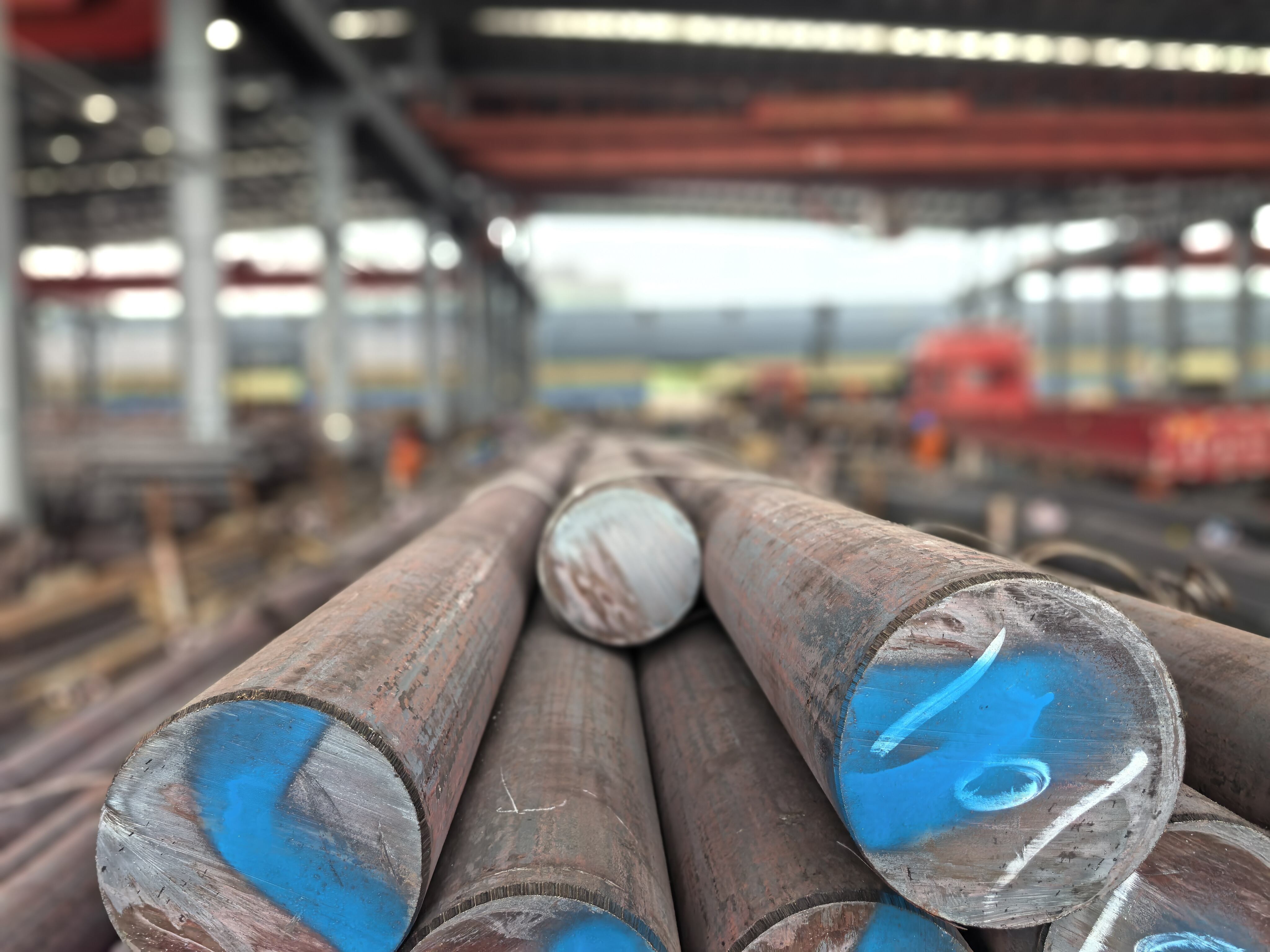
In the demanding worlds of shipbuilding and heavy machinery manufacturing, the choice of an industrial steel plate manufacturer is not merely a procurement decision—it is a strategic partnership that directly impacts structural integrity, operational safety, and long-term project viability. Marine vessels operating in corrosive saltwater environments and heavy machinery subjected to extreme mechanical stresses require steel plates that meet exacting specifications for strength, toughness, ductility, and resistance to environmental degradation. The right industrial steel plate manufacturer brings not only metallurgical expertise but also quality assurance systems, supply chain reliability, and technical support that align with the rigorous standards of classification societies, engineering codes, and regulatory frameworks governing these critical industries.
Selecting an industrial steel plate manufacturer for shipbuilding and heavy machinery applications demands comprehensive evaluation of technical capabilities, certification portfolios, production methodologies, and service infrastructure. Ship hull construction requires steel plates with superior weldability, low-temperature impact resistance, and dimensional precision, while heavy machinery frames and structural components necessitate high yield strength, fatigue resistance, and consistent mechanical properties across large plate dimensions. The manufacturing partner must demonstrate mastery of controlled rolling processes, accelerated cooling technologies, and alloy design principles that deliver predictable performance under marine corrosion, cyclic loading, and temperature extremes. This article examines the essential attributes, technical competencies, quality frameworks, and selection criteria that define a qualified industrial steel plate manufacturer capable of supporting mission-critical applications in shipbuilding and heavy machinery sectors.
Critical Technical Capabilities of Industrial Steel Plate Manufacturers
Advanced Metallurgical Engineering and Alloy Design
A competent industrial steel plate manufacturer for shipbuilding and heavy machinery applications must possess deep metallurgical engineering knowledge to formulate steel compositions that balance strength, toughness, weldability, and corrosion resistance. Ship hull plates typically require low-carbon microalloyed steels with carefully controlled manganese, silicon, niobium, and vanadium additions to achieve fine-grained microstructures that enhance impact toughness at sub-zero temperatures encountered in Arctic and North Atlantic shipping routes. Heavy machinery structural components often demand higher carbon equivalents for elevated yield strengths while maintaining adequate ductility to withstand shock loading and vibration fatigue. The manufacturer's research and development capability in thermomechanical processing and alloy optimization directly determines whether delivered plates will meet class society requirements such as Lloyd's Register, DNV, ABS, or Bureau Veritas for marine applications, and engineering standards like ASTM A36, A572, or EN 10025 for heavy machinery construction.
Modern industrial steel plate manufacturers leverage computational thermodynamics and microstructure modeling to predict phase transformations, grain refinement, and precipitation hardening during hot rolling and accelerated cooling cycles. This scientific approach enables precise control of austenite decomposition kinetics, ensuring consistent mechanical properties across plate thicknesses ranging from 6mm to 150mm or greater. For shipbuilding applications, the manufacturer must achieve uniform toughness through plate thickness to prevent brittle fracture initiation from weld heat-affected zones under service conditions. Heavy machinery applications benefit from homogeneous strength distribution that eliminates weak zones susceptible to localized yielding or crack propagation under concentrated loads. The integration of thermomechanical controlled processing with microalloying strategies represents the technical foundation distinguishing advanced industrial steel plate manufacturers from commodity suppliers.
Precision Hot Rolling and Controlled Cooling Technologies
The production capabilities of an industrial steel plate manufacturer are fundamentally defined by hot rolling mill configuration, automation level, and thermal processing precision. Ship hull plates require exceptional flatness tolerances, typically within 5mm per 2000mm length, to minimize fit-up gaps during welded assembly and reduce residual stress accumulation. Heavy machinery base plates demand tight thickness tolerances, often ±0.5mm or better, to ensure proper load distribution in bolted connections and bearing surfaces. State-of-the-art manufacturers employ multi-stand reversing or continuous rolling mills with hydraulic automatic gauge control, laser thickness measurement, and computerized rolling schedules that maintain dimensional precision while achieving target reduction ratios for grain refinement. The rolling temperature window, typically between 900°C and 1100°C for microalloyed steels, must be precisely controlled to maximize austenite recrystallization while avoiding excessive grain growth that degrades toughness.
Accelerated cooling systems represent critical differentiators among industrial steel plate manufacturers serving shipbuilding and heavy machinery markets. Laminar water cooling, spray quenching, and direct quenching technologies enable rapid transformation from austenite to fine-grained ferrite-pearlite or bainitic microstructures without the cost and complexity of subsequent heat treatment. For high-strength low-alloy ship plates like AH36, DH36, or EH36 grades, controlled cooling rates between 5°C/s and 30°C/s produce the optimal balance of 355-420 MPa yield strength and 27-joule impact energy at -20°C or -40°C. Heavy machinery applications utilizing quenched and tempered plates such as S690QL or ASTM A514 require even more sophisticated quenching systems with uniform water flow distribution and temperature monitoring to prevent distortion and ensure through-thickness hardness uniformity. The manufacturer's cooling equipment sophistication and process control expertise directly determine delivered plate quality consistency and performance reliability.
Comprehensive Testing and Quality Verification Infrastructure
An industrial steel plate manufacturer serving critical applications must maintain extensive in-house testing laboratories accredited to ISO/IEC 17025 standards and equipped with instrumentation for complete mechanical, chemical, and metallurgical characterization. Shipbuilding specifications mandate tensile testing per ASTM A370 or EN ISO 6892 to verify yield strength, ultimate tensile strength, and elongation properties in both longitudinal and transverse orientations. Charpy V-notch impact testing at specified temperatures, often -20°C, -40°C, or -60°C depending on vessel service zone, provides critical toughness data ensuring fracture resistance in cold marine environments. Heavy machinery applications require similar testing protocols but may emphasize fatigue crack growth resistance and through-thickness properties for welded joints subject to cyclic loading. The manufacturer must demonstrate statistical process control that ensures property compliance not just for test samples but across entire production lots.
Advanced characterization capabilities distinguish premium industrial steel plate manufacturers from basic commodity producers. Optical emission spectrometry for precise chemical composition analysis, scanning electron microscopy for microstructure examination, and ultrasonic testing for internal defect detection represent standard quality assurance tools. Sophisticated manufacturers additionally employ automated ultrasonic mapping systems that scan 100% of plate surface area to detect laminations, inclusions, or porosity exceeding acceptance criteria defined in ASTM A435 or EN 10160. For heavy machinery structural applications, magnetic particle inspection and eddy current testing verify surface integrity critical for fatigue performance. Shipbuilding plates often require additional testing such as hydrogen-induced cracking resistance per NACE TM0284 for sour service environments or corrosion testing per ASTM G48 for stainless cladding compatibility. The breadth and sophistication of testing infrastructure reflects the manufacturer's commitment to quality and technical capability.
Certification and Regulatory Compliance Framework
Classification Society Approvals for Marine Applications
For shipbuilding applications, an industrial steel plate manufacturer must obtain and maintain approvals from major classification societies that establish design, construction, and material standards for marine vessels. Lloyd's Register, Det Norske Veritas, American Bureau of Shipping, Bureau Veritas, and other recognized organizations conduct rigorous audits of manufacturing facilities, quality systems, and product testing protocols before granting approval to produce ship hull structural steels. These approvals require demonstrated compliance with specific material standards such as LR Grade A, B, D, or E for normal and higher strength hull steels, or DNV Grade A through F for various strength and toughness requirements. The industrial steel plate manufacturer must demonstrate continuous conformance through periodic surveillance audits and batch-by-batch certification documentation that accompanies every plate shipment.
Classification society approvals extend beyond basic material properties to encompass welding consumable compatibility, fabrication procedure qualification, and traceability systems that track each plate from ladle through final inspection. Shipyards rely on mill test certificates issued under these approval schemes to verify that received steel plates meet design specifications without requiring redundant testing. For specialized vessel types such as LNG carriers, offshore platforms, or icebreaking ships, manufacturers must obtain additional approvals for cryogenic steels, high-strength grades, or arctic service materials with exceptional low-temperature toughness. The regulatory framework governing marine construction makes classification society approval not merely desirable but mandatory for any industrial steel plate manufacturer aspiring to serve the shipbuilding sector. Manufacturers without these certifications cannot participate in marine construction supply chains regardless of production capability or price competitiveness.
Industry Standards Compliance for Heavy Machinery Construction
Heavy machinery manufacturing relies on national and international standards that specify minimum mechanical properties, chemical compositions, and testing requirements for structural steel plates. An industrial steel plate manufacturer must demonstrate compliance with standards such as ASTM A36 for general structural applications, ASTM A572 for high-strength low-alloy plates, EN 10025 series for European construction steels, or JIS G3106 for Japanese industrial standards. Heavy equipment manufacturers designing excavators, cranes, mining machinery, or agricultural equipment reference these standards in engineering specifications and expect delivered steel plates to meet all enumerated requirements without deviation. The manufacturer's quality management system must include documented procedures for standard compliance verification, non-conformance management, and customer notification of any specification deviations.
Advanced heavy machinery applications often require specialized steel grades with enhanced properties beyond conventional structural steel standards. Abrasion-resistant plates for mining equipment wear surfaces, quenched and tempered high-strength steels for crane booms, or creep-resistant alloys for high-temperature process equipment demand manufacturing expertise and testing capabilities that exceed basic commodity production. An industrial steel plate manufacturer serving these markets must maintain technical staff familiar with application-specific requirements and capable of recommending optimal steel grades for customer performance objectives. Compliance documentation including mill test certificates per EN 10204 3.1 or 3.2, heat treatment charts, and inspection reports must accompany deliveries to satisfy quality assurance requirements of OEM manufacturers and end users. The manufacturer's reputation for consistent standard compliance and technical support responsiveness significantly influences customer retention in competitive heavy machinery supply chains.
Quality Management System Certifications and Traceability
Modern industrial steel plate manufacturers operating in shipbuilding and heavy machinery markets maintain ISO 9001 quality management system certification as a baseline credential demonstrating systematic process control, continuous improvement, and customer focus. This certification provides framework for documented procedures covering order review, production planning, process parameter control, inspection protocols, and corrective action systems that ensure consistent product quality. Sophisticated manufacturers augment ISO 9001 with additional certifications such as ISO 14001 for environmental management or ISO 45001 for occupational health and safety, reflecting comprehensive operational excellence and corporate responsibility. For shipbuilding suppliers, additional scheme certifications like DNV Type Approval or BV Factory Approval demonstrate conformance to marine industry-specific quality requirements beyond generic ISO standards.
Complete material traceability from steelmaking through final delivery represents a fundamental quality requirement for critical applications in shipbuilding and heavy machinery construction. An industrial steel plate manufacturer must implement steel identification and tracking systems that record ladle numbers, casting sequences, rolling parameters, heat treatment conditions, and inspection results for every produced plate. Bar coding, laser marking, or stamped identification on each plate enables correlation to production records and mill test certificates throughout fabrication and service life. For pressure vessel applications or safety-critical structural components, traceability facilitates failure investigation and enables targeted recalls if material defects are subsequently discovered. The manufacturer's information management systems must retain production records for periods specified by industry standards or customer contracts, often 10 years or longer, and provide rapid retrieval capability when documentation is requested for accident investigation or regulatory audit purposes.
Supply Chain Reliability and Technical Support Services
Production Capacity and Delivery Performance
Shipbuilding and heavy machinery manufacturing operate on project schedules with critical path dependencies where steel plate delivery delays directly impact overall project completion and financial performance. An industrial steel plate manufacturer must maintain sufficient production capacity to fulfill large volume orders within contracted lead times while managing inventory to accommodate urgent requirements. Major shipyard orders may specify thousands of tons of hull plates with delivery schedules spanning multiple months to align with progressive construction stages. Heavy machinery manufacturers require smaller quantities but expect flexible scheduling to support just-in-time production systems that minimize inventory carrying costs. The manufacturer's order fulfillment reliability, measured by on-time delivery percentage and order completeness metrics, significantly influences customer satisfaction and repeat business probability.
Production capacity assessment for an industrial steel plate manufacturer encompasses not only rolling mill throughput but also steelmaking capacity, heat treatment infrastructure, testing laboratory workload, and logistics capabilities. Bottlenecks at any process stage compromise delivery performance regardless of mill capacity. Manufacturers serving shipbuilding markets must coordinate production planning with long procurement lead times for specialized alloying elements, refractory materials, and replacement components while maintaining buffer inventory to absorb demand variability. Heavy machinery suppliers benefit from geographic proximity to customer fabrication facilities that reduces transportation time and freight costs while enabling rapid response to design changes or supplemental orders. The manufacturer's proven track record of meeting delivery commitments during high-demand periods and managing supply disruptions reflects operational maturity and customer partnership orientation essential for strategic supplier relationships.
Technical Support and Application Engineering
Beyond commodity steel plate production, leading industrial steel plate manufacturers provide value-added technical support services that assist customers in material selection, welding procedure development, and fabrication optimization. Shipyards benefit from manufacturer guidance on steel grade selection balancing strength requirements, weldability constraints, and cost considerations for specific vessel types and service environments. Heavy machinery design engineers require technical data on fatigue properties, stress-strain behavior, and environmental resistance to support finite element analysis and safety factor determination. The manufacturer's technical team should include metallurgists, welding engineers, and application specialists capable of interpreting customer specifications, recommending optimal solutions, and troubleshooting production issues arising during fabrication.
Application engineering support distinguishes premium industrial steel plate manufacturers from transactional commodity suppliers. Welding procedure qualification assistance, including recommended preheat temperatures, interpass temperature limits, and post-weld heat treatment requirements, reduces customers' procedure development costs and accelerates production startup. Corrosion protection recommendations encompassing coating system compatibility and galvanic corrosion prevention in dissimilar metal joints add value for marine applications. Heavy machinery manufacturers appreciate fabrication guidance on forming limits, cold bending radii, and flame cutting parameters that prevent cracking or property degradation during component manufacturing. The manufacturer's willingness to conduct joint development projects, provide test plates for procedure qualification, and share metallurgical expertise builds collaborative relationships that generate customer loyalty beyond price-based competition. Technical support responsiveness and expertise depth represent competitive differentiators increasingly important as applications become more demanding and customers seek to reduce engineering overhead.
Global Logistics and Regional Service Infrastructure
International shipbuilding and heavy machinery markets require industrial steel plate manufacturers to provide global logistics capabilities and regional service infrastructure supporting customers across multiple continents. Major shipyards in South Korea, China, Japan, and Europe source steel plates through established supply chains that include ocean freight, customs clearance, and port handling with documented process for minimizing delivery time and cost. Heavy machinery manufacturers with distributed fabrication facilities expect consistent material quality and responsive service regardless of delivery location. The manufacturer's logistics capabilities, including freight forwarding partnerships, export documentation expertise, and international quality standard familiarity, directly impact market accessibility and competitive positioning in global tenders.
Regional service centers, technical support offices, and inventory warehouses enhance customer responsiveness for industrial steel plate manufacturers pursuing shipbuilding and heavy machinery markets beyond domestic boundaries. Local stock availability enables rapid fulfillment of urgent orders without transcontinental shipping delays, while regional technical staff provide language capability and time zone alignment for effective communication. For manufacturers operating in multiple markets, establishing consistent service standards, quality assurance protocols, and technical support across all regions builds brand reputation and facilitates expansion into new geographic markets. The investment in global service infrastructure reflects strategic commitment to long-term market presence and customer relationship development beyond opportunistic project participation. Customers increasingly value supply chain reliability and technical support accessibility when evaluating industrial steel plate manufacturer partnerships, making service infrastructure a competitive differentiator alongside product quality and pricing.
Material Performance Characteristics for Critical Applications
Strength and Toughness Balance for Marine Environments
Ship hull structural design requires steel plates that simultaneously achieve high yield strength to resist hydrostatic pressure and wave-induced bending moments while maintaining superior fracture toughness to prevent brittle failure under impact loading or low-temperature service conditions. An industrial steel plate manufacturer serving shipbuilding markets must produce materials meeting these conflicting requirements through controlled microstructural engineering. Normal strength hull steels with 235-315 MPa yield strength typically employ fine-grained ferrite-pearlite microstructures achieved through controlled rolling with finish temperatures in the austenite non-recrystallization region. Higher strength grades with 355-420 MPa yield strength incorporate microalloying with niobium or vanadium to enhance precipitation strengthening and grain refinement while maintaining weldability through reduced carbon content below 0.18%.
Low-temperature impact toughness represents a critical performance parameter distinguishing marine-grade steel plates from general construction materials. Ship classification societies specify minimum Charpy V-notch impact energy values, typically 27 joules at temperatures ranging from 0°C for Grade A to -40°C or -60°C for Grade E or F, depending on vessel service area and structural location. The industrial steel plate manufacturer achieves these toughness levels through fine austenite grain size prior to transformation, clean steel practices minimizing sulfur and phosphorus segregation, and controlled cooling rates promoting acicular ferrite formation. For arctic service vessels or LNG carriers, specialized steel grades with exceptional toughness at -196°C cryogenic temperatures require nickel alloying and quenching-tempering heat treatment beyond conventional thermomechanical processing capabilities. The manufacturer's metallurgical expertise in balancing strength and toughness directly determines suitability for demanding marine applications where material failure can result in catastrophic consequences.
Weldability and Fabrication Characteristics
Shipbuilding and heavy machinery construction extensively employ welded fabrication techniques, making weldability a paramount selection criterion for structural steel plates. An industrial steel plate manufacturer must formulate steel compositions and manufacturing processes that facilitate defect-free welding with standard procedures while minimizing preheat requirements and hydrogen cracking susceptibility. Carbon equivalent formulas such as CE(IIW) or Pcm predict weld metal and heat-affected zone hardness, with lower values indicating superior weldability. Marine structural steels typically limit carbon content to 0.18% maximum and calculate carbon equivalent below 0.40% to ensure weldability with conventional flux-cored arc welding or gas metal arc welding processes commonly employed in shipyard fabrication.
Heat-affected zone toughness degradation represents a primary weldability concern for high-strength steel plates used in critical structural applications. The thermal cycle during welding causes grain coarsening and microstructure transformation in base metal adjacent to the fusion line, potentially creating brittle zones susceptible to fracture initiation. The industrial steel plate manufacturer addresses this concern through fine-grained base metal microstructures, microalloying additions that inhibit grain growth during weld thermal cycles, and controlled cooling rates that promote acicular ferrite transformation in the heat-affected zone. For heavy machinery applications employing thick section welded joints, the manufacturer may recommend controlled preheat temperatures and interpass temperature limits to reduce cooling rates and minimize hardness gradients. Weldability testing including Tekken cracking tests, cruciform cracking tests, and heat-affected zone toughness evaluation demonstrate fitness for purpose before specification approval by shipyards or machinery manufacturers.
Corrosion Resistance and Environmental Durability
Marine environments subject ship hull structures to aggressive corrosion attack from saltwater immersion, atmospheric exposure, and galvanic coupling with dissimilar metals used in propulsion systems and hull fittings. While protective coating systems provide primary corrosion defense, the industrial steel plate manufacturer can enhance corrosion performance through weathering steel formulations incorporating copper, chromium, and phosphorus additions that form stable protective oxide layers. For ballast tanks and cargo holds carrying corrosive cargoes, enhanced corrosion-resistant steel grades with protective coating compatibility represent value-added solutions reducing lifecycle maintenance costs. The manufacturer's understanding of coating adhesion requirements, surface preparation standards, and corrosion mechanism in specific marine environments enables informed material recommendations supporting vessel longevity objectives.
Heavy machinery applications in mining, agriculture, and construction equipment expose structural steel components to soil moisture, chemical exposure, and temperature cycling that promote corrosion degradation over service life. The industrial steel plate manufacturer serving these markets must balance corrosion resistance with mechanical property requirements, cost constraints, and fabrication compatibility. Conventional carbon-manganese structural steels rely on protective paint systems for corrosion control, while premium applications may specify weathering steel grades that develop self-protecting patina eliminating paint maintenance. For equipment operating in marine coastal areas or chemical processing environments, the manufacturer may recommend hot-dip galvanizing compatible steel grades with controlled silicon and phosphorus content ensuring uniform coating formation. Material selection guidance considering service environment, maintenance accessibility, and lifecycle cost optimization demonstrates the manufacturer's application expertise and customer-focused technical support beyond commodity plate supply.
FAQ
What certifications should I verify when selecting an industrial steel plate manufacturer for shipbuilding projects?
When selecting an industrial steel plate manufacturer for shipbuilding applications, verify active approvals from relevant classification societies such as Lloyd's Register, Det Norske Veritas, American Bureau of Shipping, or Bureau Veritas that govern material standards for marine construction. Confirm ISO 9001 quality management system certification as baseline evidence of systematic process control and continuous improvement. Request documentation of testing laboratory accreditation to ISO/IEC 17025 ensuring competence in mechanical testing, chemical analysis, and metallurgical characterization. Additionally, verify compliance with specific marine steel standards such as ASTM A131, EN 10025, or JIS G3106 relevant to your vessel classification and service area. The manufacturer should provide complete traceability documentation including mill test certificates conforming to EN 10204 3.2 standard with heat-specific chemical composition and mechanical property data.
How does thermomechanical controlled processing improve steel plate performance for heavy machinery applications?
Thermomechanical controlled processing employed by advanced industrial steel plate manufacturers significantly enhances mechanical properties for heavy machinery applications through precise control of austenite grain refinement and phase transformation during hot rolling. By executing heavy deformation in the austenite non-recrystallization temperature region followed by accelerated cooling, the process produces fine-grained ferrite microstructures with superior strength-toughness combinations compared to conventional hot rolling or normalized conditions. For heavy machinery structural components, this processing enables achievement of 460-690 MPa yield strength levels with excellent low-temperature impact toughness and through-thickness property uniformity without subsequent heat treatment. The fine grain size improves fatigue crack initiation resistance while the controlled cooling eliminates residual stress and dimensional distortion common in quenched and tempered processing, reducing fabrication costs and improving component precision.
What minimum testing capabilities should an industrial steel plate manufacturer maintain for quality assurance?
A qualified industrial steel plate manufacturer serving shipbuilding and heavy machinery markets must maintain comprehensive in-house testing capabilities including tensile testing equipment for yield strength, ultimate tensile strength, and elongation determination per ASTM A370 or equivalent standards. Charpy V-notch impact testing machines with temperature control enabling evaluation at service temperatures from ambient to -60°C or lower verify fracture toughness critical for low-temperature applications. Chemical analysis capabilities using optical emission spectrometry or X-ray fluorescence ensure composition conformance to specification limits for carbon, manganese, phosphorus, sulfur, and alloying elements. Ultrasonic testing equipment for internal defect detection and surface inspection systems for lamination identification represent essential quality verification tools. Advanced manufacturers additionally employ metallographic laboratories for microstructure examination, hardness testing for heat treatment verification, and dimensional measurement systems ensuring thickness and flatness tolerances. All testing equipment should maintain current calibration traceable to national standards with documented calibration intervals and measurement uncertainty quantification.
How do I evaluate an industrial steel plate manufacturer's supply chain reliability for large-scale projects?
Evaluating supply chain reliability of an industrial steel plate manufacturer requires assessment of both production capacity and historical delivery performance metrics. Request information on annual production capacity, current order backlog, and typical lead times for standard versus non-standard specifications to gauge ability to accommodate your project volume within required schedules. Review on-time delivery statistics for previous large-scale projects similar to your requirements, specifically examining performance during high-demand periods when capacity constraints test operational flexibility. Assess the manufacturer's raw material sourcing strategy including steelmaking capacity ownership versus market purchases, which influences supply stability during commodity shortages. Examine logistics capabilities including freight partnerships, export documentation expertise, and inventory positioning that affect delivery reliability to your fabrication location. Request customer references from shipyards or heavy machinery manufacturers with multi-year supply relationships and inquire about responsiveness to urgent requirements, quality consistency across multiple deliveries, and technical support during fabrication issues. A manufacturer with proven large-scale project execution, transparent capacity planning, and proactive communication demonstrates supply chain reliability essential for critical project success.
Table of Contents
- Critical Technical Capabilities of Industrial Steel Plate Manufacturers
- Certification and Regulatory Compliance Framework
- Supply Chain Reliability and Technical Support Services
- Material Performance Characteristics for Critical Applications
-
FAQ
- What certifications should I verify when selecting an industrial steel plate manufacturer for shipbuilding projects?
- How does thermomechanical controlled processing improve steel plate performance for heavy machinery applications?
- What minimum testing capabilities should an industrial steel plate manufacturer maintain for quality assurance?
- How do I evaluate an industrial steel plate manufacturer's supply chain reliability for large-scale projects?