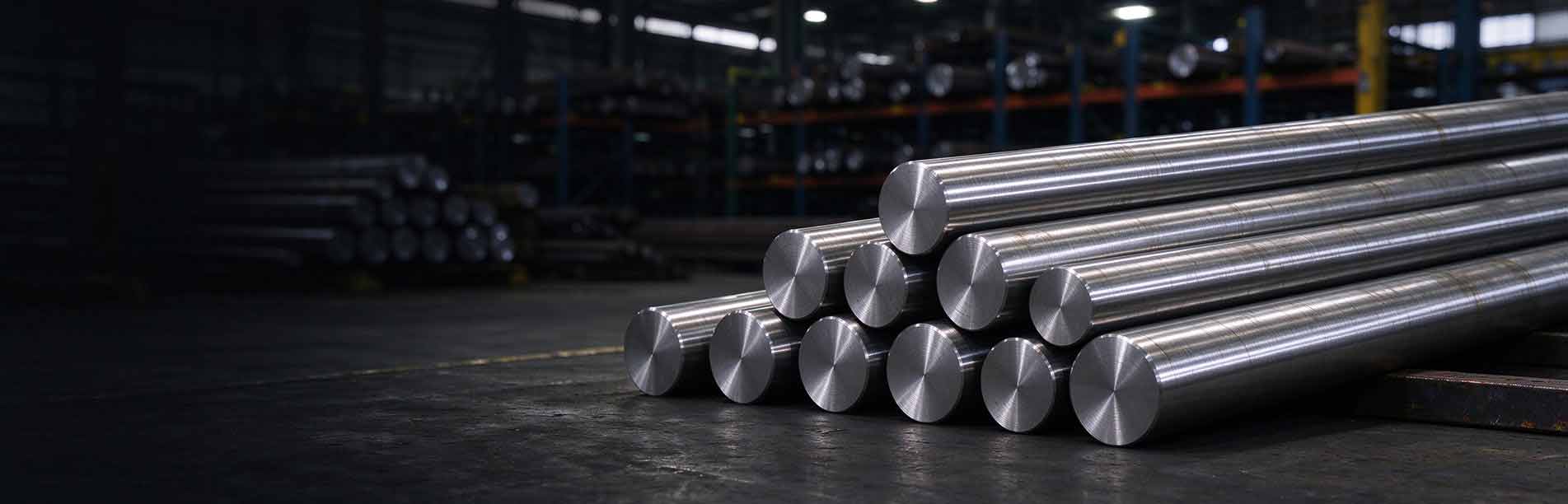
M2 is the standard high speed steel for most metal cutting tasks. M35 adds around 5% cobalt on the basis of M2, delivering better red hardness and wear resistance at elevated cutting temperatures, but at a 30–50% higher material cost.
M2 for carbon steel, aluminum and general machining; M35 High speed steel for stainless steel, hardened alloys and high-volume production where longer tool life matters more than upfront material cost.
Since we began working in the steel industry, we have frequently encountered clients who previously relied on M2 high speed steel but now find that it no longer meets their requirements. Consequently, they are currently considering alternative grades of high-speed steel.However, the primary issue concerns the price; it’s not entirely clear how it compares to the M2 in terms of cost.As we all know, the better performance comes with higher pice tag.But, for M35, why is the M35 HSS more expensive than the M2? What exactly accounts for the higher price?
The only fundamental difference between M2 and M35 lies in the cobalt addition. M35 keeps nearly the same base alloy system as M2 (Cr, Mo, W, V).But introduces 4.50–5.50% cobalt, which strengthens the steel matrix . This matrix strengthening is what gives M35 its better high-temperature cutting performance.
| Element (%) | C | Cr | Mo | W | V | Co |
| M2 HSS | 0.80–0.92 | 3.75–4.50 | 4.50–5.50 | 5.50–6.75 | 1.75–2.20 | 0 |
| M35 HSS | 0.80–0.92 | 3.75–4.50 | 4.50–5.50 | 5.50–6.75 | 1.75–2.20 | 4.50–5.50 |
Composition ranges above conform to ASTM A600 standard specifications for tungsten-molybdenum high speed tool steels. Reference data from MatWeb material property database.
Red Hardness (Hot Hardness)
This is where cobalt makes the biggest difference. M2 retains its working hardness up to roughly 550–600°C at the cutting edge, beyond which it softens quickly. M35 maintains its hardness up to about 600–650°C, so it stays sharp longer in high-speed continuous cutting that generates heavy frictional heat.
Wear Resistance
When machining stainless steel, alloy steel, cast iron or hardened workpieces, M35 typically delivers 1.5–3 times longer tool life than M2, thanks to combined carbide wear resistance and cobalt-reinforced matrix.
Toughness & Impact Resistance
M2 has better impact toughness and resistance to chipping, making it more forgiving in interrupted cuts, heavy feed rates and shock-loaded tooling. M35 is slightly more brittle due to its higher alloy and cobalt content, and is more prone to edge chipping under heavy impact conditions.
Machinability & Grindability
In the annealed delivery state, both grades machine similarly. After hardening, M35 is harder to grind and causes more wheel wear. For tool makers producing complex geometry tools with fine surface finish, M35 adds grinding cost and cycle time.
1,When machining soft metals such as ordinary carbon steel, aluminum, or brass
2,Under conditions that involve interrupted cuts, high feed rates, or impact loads
3,When manufacturing general-purpose drill bits, taps, end mills, or standard stamping punches
4,In such cases, the initial cost of raw materials is the primary consideration.
1,You machine harder metals such as stainless steel, quenched and tempered steel, cast iron, or high-temperature alloys.
2,You run high-speed continuous cutting on CNC production lines
3,Tool change downtime accounts for a large share of your total production cost
4,You need longer tool life to reduce consumable cost and labor for tool replacement
5,You manufacture high-performance taps, drills, end mills and heavy-duty cold forming punches
1,Your application involves heavy impact or severe interrupted cutting (M2 will outlast M35 due to better toughness)
2,You only cut soft non-ferrous metals where cobalt brings no measurable benefit
M2 equivalents: AISI M2, UNS T11302, JIS SKH51, DIN 1.3343 / HS6-5-2C
M35 equivalents: AISI M35, UNS T11335, JIS SKH55, DIN 1.3243 / HS6-5-2-5
Common standard: ASTM A600
Supply forms: Round bar, flat bar, forged bar and cut-to-size blanks, delivered in fully annealed condition