
 EN
EN
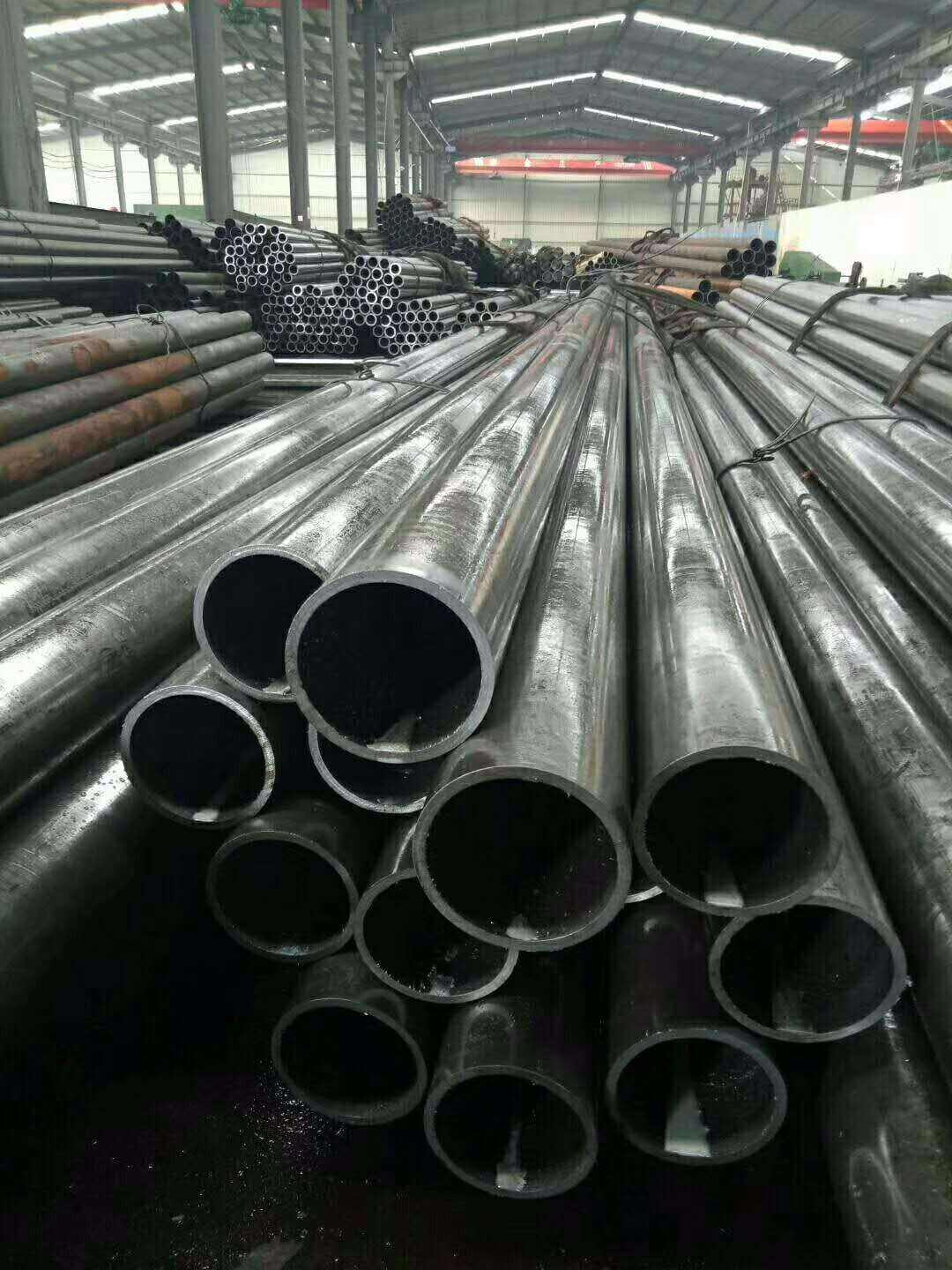
Power generation facilities worldwide depend on turbines that operate under extreme thermal and mechanical stress, where conventional materials would fail within hours. The remarkable performance of modern power plant turbines stems directly from the strategic use of high temperature alloys, specialized metallurgical formulations engineered to maintain structural integrity, resist oxidation, and deliver consistent mechanical properties at temperatures exceeding 600°C. These advanced materials form the backbone of critical turbine components including blades, discs, combustion chambers, and piping systems, enabling power plants to achieve higher operating temperatures that translate directly into improved thermal efficiency and reduced fuel consumption. Understanding how high temperature alloys enable turbine performance requires examining their unique metallurgical characteristics, the specific mechanisms through which they resist degradation, and the direct correlation between material properties and operational outcomes in demanding power generation environments.
The evolution of turbine technology in power plants has been fundamentally limited by material capabilities, with each generation of high temperature alloys unlocking higher operating temperatures and correspondingly greater efficiency gains. Modern combined-cycle power plants routinely achieve thermal efficiencies approaching 60 percent, a level unattainable without the exceptional properties of nickel-based superalloys, chromium-molybdenum steels, and advanced austenitic materials. These high temperature alloys enable turbines to withstand not only extreme heat but also the simultaneous challenges of high-pressure steam, oxidizing atmospheres, thermal cycling, and centrifugal forces that would cause catastrophic failure in standard steels. The economic and environmental implications are substantial, as improved turbine performance directly reduces carbon emissions per megawatt-hour while extending equipment service life and reducing maintenance frequency.
Metallurgical Foundations of Turbine-Grade High Temperature Alloys
Alloying Elements and Their Functional Roles
The superior performance of high temperature alloys in turbine applications derives from carefully balanced combinations of alloying elements, each contributing specific properties essential for sustained operation under extreme conditions. Nickel serves as the primary base element in many superalloys due to its excellent high-temperature strength retention and resistance to oxidation, forming a stable face-centered cubic crystal structure that maintains ductility even at elevated temperatures. Chromium additions ranging from 15 to 25 percent provide oxidation and corrosion resistance by forming protective chromium oxide surface layers that prevent further degradation. Molybdenum and tungsten contribute solid-solution strengthening, increasing creep resistance by impeding dislocation movement at temperatures where conventional strengthening mechanisms become ineffective. Aluminum and titanium enable precipitation hardening through the formation of gamma-prime phases, creating coherent precipitates that dramatically increase strength without sacrificing ductility.
The specific composition of high temperature alloys varies according to turbine component location and operating conditions, with hot-section components requiring different metallurgical approaches than intermediate-temperature applications. Nickel-based superalloys such as Inconel 718 and Waspaloy dominate the hottest sections, offering strength retention above 700°C through complex precipitation mechanisms. Chromium-molybdenum steels including P91, P92, and P122 grades serve intermediate-temperature applications where cost-effectiveness balances performance requirements. Cobalt additions in certain formulations enhance thermal fatigue resistance and maintain hardness at extreme temperatures. Niobium, tantalum, and hafnium act as carbide formers, creating stable dispersed phases that pin grain boundaries and resist creep deformation. This systematic approach to alloying enables turbine designers to specify materials with precisely tailored properties matching each component's thermal and mechanical demands.
Microstructural Engineering for Performance Optimization
Beyond chemical composition, the microstructure of high temperature alloys fundamentally determines their turbine performance capabilities, with controlled processing creating grain structures and phase distributions optimized for specific operating conditions. Directional solidification techniques produce columnar grain structures aligned with principal stress directions in turbine blades, eliminating transverse grain boundaries that serve as weak points for crack initiation. Single-crystal casting technology represents the ultimate microstructural refinement, completely eliminating grain boundaries to maximize creep resistance and thermal fatigue life in the most demanding applications. Controlled heat treatment sequences precipitate strengthening phases in optimal size distributions, balancing strength with ductility to prevent brittle failure under thermal shock conditions.
The grain size of high temperature alloys critically influences their mechanical behavior, with fine-grained structures offering superior low-cycle fatigue resistance while coarse grains provide better creep resistance at sustained high temperatures. Turbine disc applications typically require fine-grained microstructures to withstand cyclic loading during start-stop operations, while blade materials benefit from coarse or directionally solidified structures resisting steady-state creep. Advanced processing techniques including powder metallurgy enable unprecedented microstructural uniformity, eliminating segregation issues that compromise performance in conventionally cast materials. Hot isostatic pressing consolidates powder precursors under simultaneous heat and pressure, producing fully dense components with homogeneous property distributions. These microstructural control methods enable high temperature alloys to deliver consistent performance across component volumes, preventing localized weak zones that could precipitate failure.
Mechanisms Enabling Superior Turbine Performance
Creep Resistance Under Sustained Loading
Creep deformation represents the primary failure mechanism in turbine components operating at elevated temperatures, making creep resistance the most critical performance attribute of high temperature alloys in power plant applications. Unlike instantaneous mechanical failure, creep involves time-dependent plastic deformation occurring under constant stress at temperatures exceeding approximately 40 percent of the melting point, where atomic diffusion becomes sufficiently active to enable dislocation climb and grain boundary sliding. High temperature alloys combat creep through multiple complementary mechanisms, beginning with solid-solution strengthening where dissolved alloying elements create lattice distortions that impede dislocation movement. Precipitation hardening introduces coherent second-phase particles that force dislocations to either cut through precipitates or bypass them through energy-intensive looping mechanisms, dramatically reducing creep rates.
The high temperature alloys used in modern turbine piping systems demonstrate exceptional creep resistance through carefully engineered microstructures containing stable carbide dispersions and optimized grain boundary chemistry. Carbide precipitates including MC, M23C6, and M6C types form along grain boundaries, preventing boundary sliding while maintaining sufficient ductility for thermal expansion accommodation. Advanced chromium-molybdenum grades incorporate boron and nitrogen in controlled quantities, producing fine nitride and boride dispersions that further enhance creep strength. The cumulative effect enables turbine materials to maintain dimensional stability for design lives exceeding 100,000 operating hours at steam temperatures approaching 620°C, supporting the economic viability of baseload power generation.
Oxidation and Corrosion Resistance in Combustion Environments
Turbine components face aggressive oxidizing environments where high-velocity combustion gases containing oxygen, water vapor, and trace contaminants attack material surfaces at temperatures where oxidation kinetics accelerate exponentially. High temperature alloys resist degradation through the formation of protective oxide scales, primarily chromium oxide and aluminum oxide, which adhere tightly to substrate surfaces and exhibit extremely low oxygen diffusion rates. Chromium concentrations above 18 percent enable continuous chromia scale formation, creating a self-healing barrier that reforms if damaged during thermal cycling. Aluminum additions promote the formation of alumina scales in the most severe conditions, offering superior protection above 1000°C where chromia becomes volatile and loses effectiveness.
The oxidation resistance of high temperature alloys directly impacts turbine efficiency by preventing material loss that would alter blade profiles and disrupt aerodynamic performance. Even minimal surface recession changes blade tip clearances and passage geometries, reducing turbine efficiency and requiring premature component replacement. Nickel-based superalloys maintain oxide scale stability through reactive element additions including yttrium, lanthanum, and cerium, which improve scale adhesion and reduce growth rates by modifying oxide grain structures. Hot corrosion resistance becomes critical in fossil-fuel-fired plants where sulfur and vanadium compounds form low-melting-point eutectics that dissolve protective oxides. High temperature alloys combat hot corrosion through controlled chromium levels and strategic additions of molybdenum and tungsten, which form refractory oxides resistant to molten salt attack. This comprehensive corrosion resistance enables sustained high-temperature operation without progressive material degradation.
Thermal Fatigue Tolerance During Cycling Operations
Modern power plants increasingly operate in load-following modes responding to grid demand fluctuations, subjecting turbine components to thermal cycling that induces cyclic stress and progressive fatigue damage. High temperature alloys must accommodate repeated thermal expansion and contraction without developing cracks that would propagate to failure. Thermal fatigue resistance depends on the material's coefficient of thermal expansion, elastic modulus, yield strength, and ductility, with optimal combinations minimizing stress accumulation during temperature changes. Austenitic high temperature alloys exhibit higher thermal expansion coefficients than ferritic grades, requiring careful design consideration for mixed-material joints and transitions.
The ability of high temperature alloys to resist low-cycle fatigue stems from their capacity to accommodate plastic strain without crack initiation, maintaining ductility even after extended high-temperature exposure. Precipitation-hardened nickel alloys retain sufficient ductility through controlled aging treatments that optimize precipitate size distributions, preventing overaging that would embrittle the matrix. Grain boundary engineering through controlled thermomechanical processing produces boundaries resistant to crack nucleation and propagation. Advanced high temperature alloys incorporate hafnium and zirconium to improve grain boundary cohesion, reducing susceptibility to intergranular cracking under combined creep-fatigue loading. These fatigue-resistant properties enable turbines to withstand thousands of start-stop cycles throughout their service lives, maintaining structural integrity despite the mechanical damage accumulation inherent in cyclic operation.
Performance Correlation Between Alloy Properties and Turbine Efficiency
Temperature Capability and Thermodynamic Efficiency Gains
The fundamental relationship between turbine inlet temperature and power plant efficiency creates direct economic incentives for deploying high temperature alloys capable of withstanding progressively higher operating temperatures. Thermodynamic principles dictate that Carnot efficiency increases with higher peak cycle temperatures, with each 50°C increase in steam temperature potentially improving thermal efficiency by 2 to 3 percentage points. High temperature alloys enable these efficiency gains by maintaining structural integrity at steam conditions that would cause rapid failure in conventional materials. Modern ultra-supercritical plants operate at steam temperatures exceeding 600°C and pressures above 300 bar, conditions made possible by advanced chromium-molybdenum alloys and nickel-based superalloys.
The temperature capability of high temperature alloys translates directly into fuel savings and emission reductions across the power plant fleet. A 600-megawatt combined-cycle plant operating at 58 percent efficiency instead of 55 percent saves approximately 6,000 tons of natural gas annually, reducing both operating costs and carbon dioxide emissions proportionally. High temperature alloys enable these efficiency levels by permitting turbine designers to specify higher steam parameters without compromising reliability or component longevity. The economic justification for premium alloy materials becomes clear when fuel savings over the turbine's 25-year design life far exceed the incremental material costs. This performance-cost relationship drives continuous development of new high temperature alloys with incrementally improved temperature capabilities, as each capability increase unlocks measurable efficiency improvements.
Mechanical Strength and Component Reliability
Turbine blades experience centrifugal forces exceeding 20,000 times gravity in large steam turbines, creating extreme tensile stresses that demand exceptional mechanical strength from high temperature alloys. The stress-rupture strength of turbine materials directly determines maximum rotational speeds and blade lengths, which in turn influence turbine efficiency and power output. High temperature alloys maintain yield strengths above 400 MPa even at operating temperatures, resisting plastic deformation under combined centrifugal, gas bending, and vibratory loads. Advanced nickel superalloys achieve stress-rupture lives exceeding 100,000 hours at stress levels of 150 MPa and temperatures of 700°C, enabling aggressive turbine designs that maximize energy extraction.
The reliability of high temperature alloys in turbine applications depends not only on average strength properties but also on statistical consistency and absence of defect populations that could initiate premature failures. Advanced melting practices including vacuum induction melting and electroslag remelting produce exceptionally clean materials with minimal inclusions and segregation. Non-destructive testing protocols employing ultrasonic and radiographic methods detect internal flaws before component fabrication. Statistical process control during alloy production ensures property distributions remain within narrow specification bands, providing turbine designers with confidence in long-term performance predictions. This reliability enables extended maintenance intervals and reduced forced outage rates, directly improving power plant economics and grid reliability.
Dimensional Stability and Efficiency Preservation
Turbine efficiency degrades progressively if component dimensions change during service, making the dimensional stability of high temperature alloys critical for sustained performance throughout design life. Creep deformation causing blade elongation increases tip clearances in shrouded designs, creating leakage paths that reduce stage efficiency. Oxidation-induced material loss alters blade profiles, disrupting carefully optimized aerodynamic contours. High temperature alloys resist these degradation mechanisms through inherent creep resistance and protective oxide formation, maintaining original geometries within tolerances measured in hundredths of millimeters over decades of operation.
The coefficient of thermal expansion in high temperature alloys must be carefully matched to mating components to prevent differential expansion that could cause binding, excessive clearances, or stress concentrations at interfaces. Turbine rotors typically employ different alloy grades in disc and blade applications, requiring compatible expansion characteristics across operating temperature ranges. Advanced finite element modeling predicts thermal distortions throughout transient and steady-state conditions, enabling designers to specify high temperature alloys with expansion properties that minimize stress accumulation. Phase stability represents another dimensional consideration, as phase transformations during service could cause volume changes and property degradation. High temperature alloys used in turbines undergo extensive aging studies to verify microstructural stability throughout anticipated service conditions, ensuring that precipitate phases remain stable and beneficial rather than transforming into embrittling compounds.
Application-Specific Alloy Selection for Turbine Systems
Hot Section Components in Gas Turbines
Gas turbine hot sections operate at temperatures exceeding 1200°C in advanced designs, requiring high temperature alloys with exceptional oxidation resistance and creep strength under the most demanding conditions encountered in power generation. First-stage turbine blades employ directionally solidified or single-crystal nickel-based superalloys containing high concentrations of refractory elements including rhenium, tantalum, and tungsten. These premium high temperature alloys maintain load-bearing capacity at metal temperatures approaching 1050°C, enabled by internal cooling passages that reduce surface temperatures below combustion gas temperatures. Thermal barrier coatings applied to blade surfaces provide additional thermal protection, allowing substrate temperatures to remain within material capability limits.
Combustion chamber components utilize high temperature alloys with superior oxidation resistance and fabricability, typically wrought nickel-chromium alloys including Hastelloy X and Haynes 230. These materials withstand direct flame impingement while accommodating thermal stresses from temperature gradients between hot and cold surfaces. Transition pieces connecting combustors to turbine sections employ cast nickel alloys optimized for complex geometries and thermal shock resistance. The selection of high temperature alloys for hot section components balances performance requirements against manufacturing constraints, as single-crystal blade production involves specialized foundries and lengthy lead times. Spare part availability and repair capabilities influence material choices, with some operators preferring polycrystalline alloys offering simpler repair welding despite modest performance compromises.
Steam Turbine High-Pressure Sections
High-pressure steam turbines in modern power plants operate with inlet conditions reaching 620°C and 300 bar, creating severe stress and temperature combinations that demand specialized high temperature alloys throughout the steam path. Turbine rotors fabricated from advanced chromium-molybdenum-vanadium steels provide the combination of creep strength, toughness, and through-thickness property uniformity required for these massive forgings weighing up to 200 tons. Rotor alloys must resist creep under centrifugal stresses while maintaining fracture toughness sufficient to prevent catastrophic brittle fracture. Advanced grades including 10Cr-1Mo-1W-VNbN steels offer creep rupture strengths approximately 50 percent higher than earlier 12Cr-1Mo-1V compositions, enabling higher steam parameters.
Steam turbine blading employs martensitic stainless steels in high-pressure stages, balancing creep resistance with erosion resistance from moisture-bearing steam at lower stages. High temperature alloys in blade applications must resist steam oxidation, stress corrosion cracking, and erosion from entrained water droplets impacting leading edges at supersonic velocities. Precipitation-hardened martensitic grades including 17-4PH and Custom 450 serve intermediate temperature stages, offering superior strength-to-weight ratios. Austenitic stainless steels provide corrosion resistance in the wettest stages where temperatures moderate but aqueous corrosion becomes significant. The progression of high temperature alloys through turbine stages reflects the changing balance of thermal, mechanical, and environmental challenges from inlet to exhaust, with material selection optimized for each stage's unique conditions.
Piping Systems and High-Temperature Pressure Vessels
Power plant piping systems transporting superheated and reheated steam operate under sustained high temperature and pressure, requiring high temperature alloys with exceptional creep resistance and weldability throughout extensive piping networks. Chromium-molybdenum alloy steels dominate these applications, with grade selection depending on design temperature and pressure conditions. Lower-temperature steam lines employ T11 and T22 grades, while superheater and reheater piping utilizes advanced grades including P91, P92, and P122 offering superior creep strength. These high temperature alloys enable wall thickness reductions compared to earlier materials, reducing both material costs and thermal stresses from temperature gradients through pipe walls.
The weldability of high temperature alloys critically influences piping system construction and maintenance, as complex power plants contain thousands of welded joints that must maintain parent metal properties throughout decades of service. Advanced chromium-molybdenum grades require carefully controlled preheat, interpass temperature, and post-weld heat treatment procedures to develop optimal microstructures and avoid cracking. Dissimilar metal welds joining high temperature alloys to austenitic stainless steels or nickel alloys present particular challenges, requiring specialized filler metals and procedures preventing premature failures at interfaces. Steam generator tubes fabricated from high temperature alloys must resist both steam-side oxidation and fire-side corrosion from combustion products, with material selection depending on fuel type and firing conditions. The comprehensive application of appropriate high temperature alloys throughout steam path components enables reliable power generation at the elevated temperatures necessary for competitive thermal efficiency.
FAQ
What makes high temperature alloys superior to conventional steels in turbine applications?
High temperature alloys outperform conventional steels through specialized alloying and microstructural engineering that enables sustained operation above 540°C where standard steels lose strength and oxidation resistance. These materials incorporate elements like nickel, chromium, molybdenum, and tungsten in carefully balanced compositions that provide solid-solution strengthening, precipitation hardening, and protective oxide formation. Their microstructures contain stable phases that resist coarsening and dissolution at elevated temperatures, maintaining mechanical properties throughout extended service periods. Conventional carbon and low-alloy steels experience rapid creep deformation, excessive oxidation, and phase transformations above 450°C, making them unsuitable for modern high-efficiency turbine conditions. The superior temperature capability of high temperature alloys directly enables the higher steam parameters that improve thermal efficiency and reduce fuel consumption in power generation.
How do high temperature alloys maintain strength at elevated operating temperatures?
High temperature alloys maintain strength through multiple complementary mechanisms that remain effective when conventional strengthening approaches fail. Solid-solution strengthening occurs when alloying elements dissolve in the base metal crystal structure, creating lattice distortions that impede dislocation movement even as thermal energy increases atomic mobility. Precipitation hardening introduces coherent second-phase particles that block dislocation motion through cutting and looping mechanisms, with particle stability at high temperatures maintained through careful alloy chemistry. Grain boundary strengthening using carbide, nitride, and boride dispersions prevents grain boundary sliding, the dominant creep mechanism at elevated temperatures. Directional solidification and single-crystal processing eliminate grain boundaries entirely in the most critical applications. These mechanisms work synergistically to maintain yield strengths above 400 MPa and creep resistance for 100,000-hour service lives at temperatures exceeding 600°C, performance impossible with conventional materials.
What determines the service life of high temperature alloy components in turbines?
Service life of high temperature alloy turbine components depends on accumulated creep damage, oxidation and corrosion material loss, thermal fatigue crack growth, and microstructural degradation from extended high-temperature exposure. Creep damage accumulates according to time-temperature-stress relationships, with component life consumed faster at higher temperatures and stresses through the Larson-Miller parameter and similar life prediction models. Oxidation progressively reduces load-bearing cross-sections while potentially introducing stress concentration sites. Thermal cycling during start-stop operations nucleates and propagates fatigue cracks that eventually reach critical dimensions. Microstructural coarsening including precipitate growth and carbide agglomeration gradually reduces strength properties. High temperature alloys are selected with sufficient performance margins to ensure these degradation mechanisms remain subcritical throughout design life, typically 100,000 to 200,000 operating hours depending on application severity and cycling frequency.
Can high temperature alloys be repaired or refurbished after service exposure?
Many high temperature alloy turbine components can be successfully repaired and refurbished through specialized processes that restore dimensions and properties, extending service life and deferring replacement costs. Weld repair techniques using matching or overmatching filler metals can rebuild eroded or cracked regions, with subsequent heat treatment restoring optimal microstructures. Laser cladding and thermal spraying deposit wear-resistant coatings on degraded surfaces without excessive substrate heating. Hot isostatic pressing can close internal porosity and creep voids in certain applications. However, repair feasibility depends on alloy type, with wrought and polycrystalline cast materials generally more repairable than directionally solidified or single-crystal components where repair processing disrupts grain structure. Nondestructive evaluation before and after repair verifies that restored components meet fitness-for-service criteria. Economic analysis comparing repair costs against new component prices and remaining life determines whether refurbishment makes business sense for specific situations.
Table of Contents
- Metallurgical Foundations of Turbine-Grade High Temperature Alloys
- Mechanisms Enabling Superior Turbine Performance
- Performance Correlation Between Alloy Properties and Turbine Efficiency
- Application-Specific Alloy Selection for Turbine Systems
-
FAQ
- What makes high temperature alloys superior to conventional steels in turbine applications?
- How do high temperature alloys maintain strength at elevated operating temperatures?
- What determines the service life of high temperature alloy components in turbines?
- Can high temperature alloys be repaired or refurbished after service exposure?