
 EN
EN
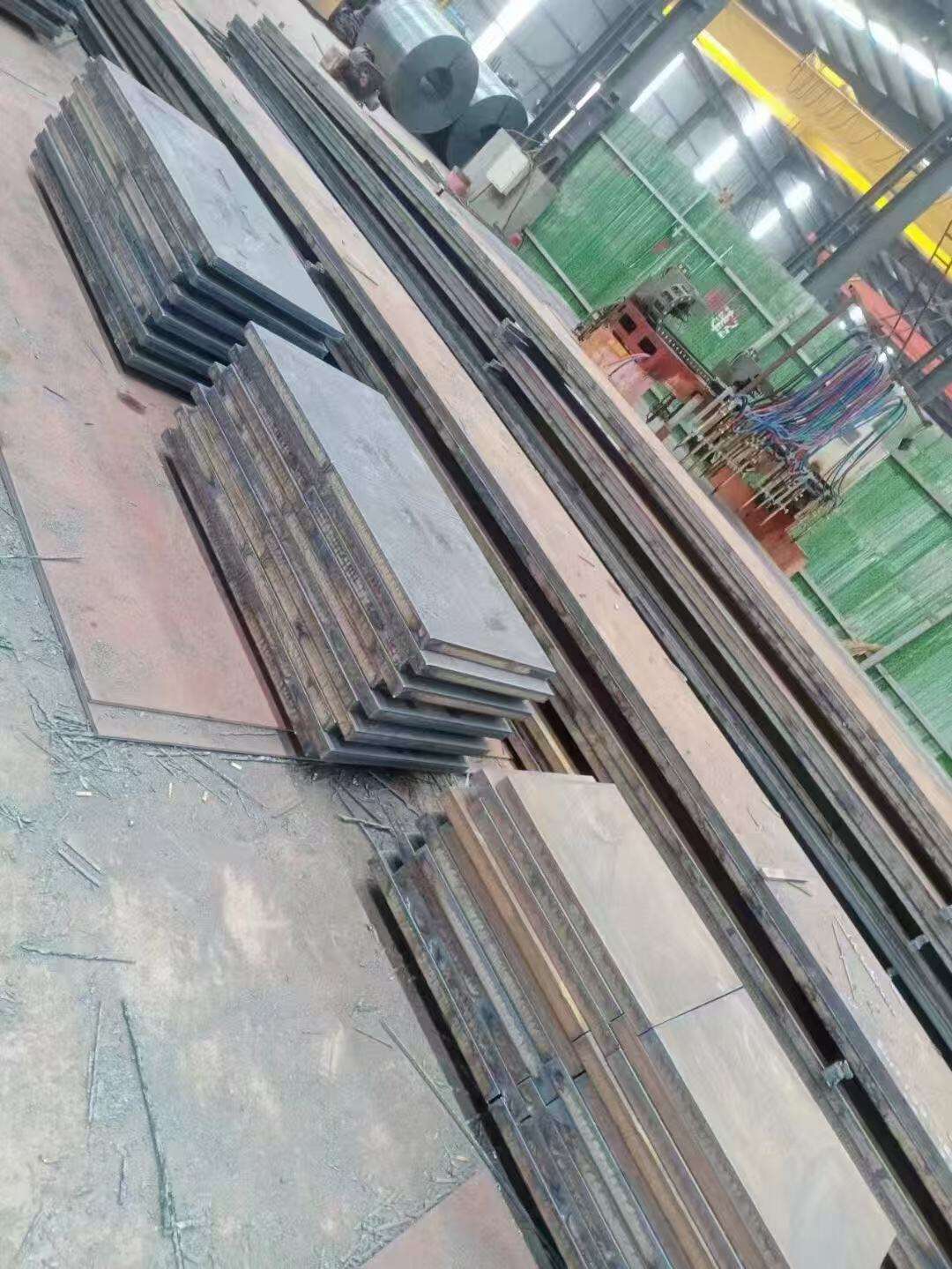
Heavy machinery operates under some of the most demanding conditions in industrial environments, where structural integrity and material performance directly influence operational safety, equipment longevity, and project economics. The adoption of high strength steel in the construction of excavators, bulldozers, cranes, mining equipment, and agricultural machinery has fundamentally transformed engineering approaches to load-bearing capacity, weight optimization, and durability. Unlike conventional carbon steels, high strength steel delivers superior mechanical properties that enable designers to reduce component thickness while maintaining or exceeding structural performance requirements, creating machinery that is simultaneously lighter, stronger, and more fuel-efficient.
The structural advantages of high strength steel extend far beyond simple tensile ratings, encompassing fatigue resistance, impact absorption, weldability, and dimensional stability under cyclic loading. For heavy machinery manufacturers facing increasingly stringent emission regulations and customer demands for higher productivity per unit weight, the strategic application of high strength steel represents a critical competitive differentiator. This article examines the specific structural benefits that high strength steel brings to heavy machinery applications, analyzing how material properties translate into engineering advantages across design, fabrication, operation, and maintenance phases of equipment lifecycles.
Enhanced Load-Bearing Capacity and Structural Efficiency
Superior Yield Strength Enabling Optimized Component Design
The primary structural advantage of high strength steel lies in its elevated yield strength, typically ranging from 420 MPa to 960 MPa compared to conventional structural steels at 235-355 MPa. This fundamental material property allows heavy machinery engineers to recalculate structural requirements using thinner cross-sections while achieving identical or superior load-bearing performance. In excavator booms, for instance, replacing S355 grade steel with high strength steel grades such as S460 or S500 can reduce plate thickness by 20-30 percent without compromising structural integrity. This thickness reduction directly translates to weight savings that propagate throughout the entire machine design, enabling smaller hydraulic systems, reduced counterweight requirements, and lower ground pressure.
The stress distribution advantages of high strength steel become particularly evident in complex geometries where traditional materials would require substantial reinforcement. Crane boom sections manufactured from high strength steel can achieve longer unsupported spans between structural joints, reducing the number of connection points that introduce potential failure modes. The material's capacity to withstand higher working stresses means that safety factors can be maintained at industry-standard levels while pushing operational envelopes further. For mining shovels handling 100-ton payloads, the boom and dipper structures benefit immensely from high strength steel's ability to resist bending moments and torsional loads that would cause permanent deformation in lower-grade materials.
Weight Reduction Without Compromising Structural Integrity
Weight optimization represents one of the most tangible structural advantages when implementing high strength steel in heavy machinery. Every kilogram removed from structural components creates cascading benefits throughout the machine architecture. Agricultural harvesters constructed with high strength steel frames can reduce overall machine weight by 15-25 percent compared to conventional steel designs, directly improving soil compaction characteristics and field accessibility during wet conditions. This weight reduction does not come at the expense of structural robustness; rather, the superior strength-to-weight ratio of high strength steel ensures that critical safety margins remain intact or improve.
The economic implications of weight reduction extend beyond initial manufacturing costs. Lighter heavy machinery consumes less fuel during operation, requires smaller engines to achieve equivalent performance, and imposes reduced wear on tires, tracks, and undercarriage components. For mobile cranes, the weight saved through high strength steel application can be reallocated to increased lifting capacity or operational range without exceeding road transport limitations. Quarry trucks utilizing high strength steel in chassis and dump body construction can legally carry larger payloads within regulated gross vehicle weight limits, directly improving ton-per-hour productivity metrics that determine project profitability.
Improved Resistance to Buckling and Compression Failures
Structural stability under compressive loading represents a critical design challenge in heavy machinery, where long unsupported members such as hydraulic cylinder rods, support columns, and boom sections face buckling risks. High strength steel exhibits superior buckling resistance due to its elevated elastic modulus and yield strength characteristics, allowing engineers to design slender structural members that would be impractical with conventional materials. This advantage proves particularly valuable in telescopic boom designs for mobile cranes and aerial work platforms, where multiple nested sections must maintain column stability while extending to substantial working heights.
The reduced wall thickness enabled by high strength steel does not compromise the moment of inertia calculations that govern buckling behavior, as designers can optimize cross-sectional geometries to maintain stiffness while reducing material volume. Box-section fabrications using high strength steel plates achieve equivalent or superior buckling resistance compared to thicker conventional steel sections, while simultaneously offering better torsional rigidity. For bulldozer blades and loader arms subjected to significant compression forces during material penetration, high strength steel provides the structural stability necessary to prevent catastrophic collapse or permanent deformation that would compromise operational geometry and performance.
Exceptional Fatigue Resistance and Service Life Extension
Superior Endurance Under Cyclic Loading Conditions
Heavy machinery components experience millions of loading cycles throughout their operational lifespan, making fatigue resistance a paramount structural consideration. High strength steel demonstrates excellent fatigue performance characteristics, with endurance limits typically 40-50 percent of ultimate tensile strength compared to 35-45 percent for conventional steels. This superior fatigue resistance translates directly to extended component service life and reduced maintenance requirements. Excavator stick and boom assemblies fabricated from high strength steel can operate for 15,000-20,000 hours before requiring structural inspection or component replacement, compared to 10,000-12,000 hours for conventional steel equivalents operating under identical duty cycles.
The microstructural characteristics that give high strength steel its elevated yield strength also contribute to crack propagation resistance under cyclic stress. The fine-grained structure and controlled alloying elements create obstacles to fatigue crack initiation and growth, effectively extending the fatigue life curve across all stress amplitude ranges. For loader buckets and material handling attachments subjected to constant filling, lifting, and dumping cycles, this fatigue advantage means fewer catastrophic failures and improved equipment availability. Mining dragline buckets constructed with high strength steel can handle abrasive overburden materials for extended periods without developing the stress concentration cracks that plague conventional steel buckets after intensive use.
Reduced Crack Initiation at Stress Concentration Points
Welded joints, attachment points, and geometric transitions create stress concentration zones where crack initiation typically occurs in heavy machinery structures. High strength steel's superior notch toughness and fracture resistance provide critical advantages in these vulnerable locations. The material's ability to redistribute localized stress peaks through plastic deformation rather than initiating brittle fracture substantially reduces the probability of catastrophic failure modes. Crane hook attachment points and hydraulic cylinder mounting lugs benefit particularly from this characteristic, as these locations experience both high nominal stress and geometric stress concentration factors.
The weldability of modern high strength steel grades has improved dramatically through controlled chemistry and thermomechanical processing, allowing fabricators to create robust joints without excessive heat-affected zone softening. When properly welded using specified filler metals and procedures, high strength steel joints can achieve 90-100 percent of base metal strength, maintaining structural integrity at the locations most prone to fatigue crack development. For articulated dump trucks and haul trucks operating on rough terrain, the suspension mounting points and frame articulation joints constructed with high strength steel demonstrate significantly lower failure rates compared to conventional steel designs, directly improving vehicle uptime and reducing unscheduled maintenance costs.
Extended Maintenance Intervals and Reduced Downtime
The durability advantages of high strength steel translate directly into operational economics through extended maintenance intervals and improved machine availability. Equipment owners can implement condition-based maintenance strategies rather than conservative time-based replacement schedules, as the superior fatigue and wear resistance of high strength steel components extends useful service life. Forestry equipment undercarriages manufactured with high strength steel demonstrate 30-40 percent longer intervals between track frame replacement compared to conventional materials, reducing both parts costs and machine downtime for major component changes.
The structural stability of high strength steel under prolonged service also means that critical dimensional tolerances remain within specification longer, maintaining operational precision and efficiency throughout component life. Excavator boom and stick assemblies retain geometric accuracy for cylinder alignment and bucket positioning far longer when constructed from high strength steel, avoiding the gradual performance degradation that occurs as conventional steel structures experience cumulative plastic deformation. This dimensional stability proves particularly valuable in precision applications such as trenching, grading, and material placement operations where positional accuracy directly affects work quality and productivity.
Superior Impact Absorption and Damage Tolerance
Enhanced Toughness in Dynamic Loading Scenarios
Heavy machinery frequently encounters sudden impact loads during normal operation, from excavator bucket teeth striking buried obstacles to haul truck bodies receiving dumped material from extreme heights. High strength steel grades engineered for structural applications exhibit excellent impact toughness, measured through Charpy V-notch testing at specified temperatures. This toughness ensures that machinery structures can absorb shock loads without brittle fracture, maintaining structural integrity even when subjected to loading scenarios that exceed design parameters. Rock breaker mounting brackets and demolition equipment attachments particularly benefit from this characteristic, as these components routinely experience impact forces that would crack or shatter lower-toughness materials.
The energy absorption capacity of high strength steel becomes critical in protecting operators and equipment during accidental overload conditions. When a crane approaches its rated capacity or an excavator encounters unexpected ground resistance, the structural elements manufactured from high strength steel can accommodate brief stress excursions beyond yield strength through controlled plastic deformation rather than sudden catastrophic failure. This damage-tolerant behavior provides crucial safety margins and often allows equipment to complete critical lifts or operations safely even when parameters slightly exceed planned values. The combination of high strength and substantial elongation capacity creates a material that is simultaneously strong and forgiving, ideal for the unpredictable conditions encountered in construction, mining, and forestry applications.
Resistance to Abrasive Wear and Surface Damage
While primarily valued for structural properties, high strength steel also demonstrates improved resistance to surface wear and abrasion compared to mild structural steels. The harder surface characteristics associated with elevated strength levels provide modest but meaningful improvements in wear resistance for components subjected to sliding contact, material flow, and particulate abrasion. Loader bucket floors and excavator bucket shells manufactured from high strength steel retain dimensional integrity longer when handling abrasive materials such as crushed rock, slag, and mining overburden. This wear resistance reduces maintenance frequency and extends component replacement intervals, particularly in high-production environments where material handling volumes are substantial.
The surface hardness of high strength steel also provides better resistance to gouging and scratching damage from sharp objects encountered during demolition work and land clearing operations. While specialized abrasion-resistant steels offer superior performance in extreme wear applications, structural-grade high strength steel provides an excellent balance of strength, toughness, weldability, and wear resistance for general heavy machinery applications. Demolition grapples and material sorting attachments benefit from this multi-faceted performance profile, maintaining both structural integrity and functional surface conditions throughout demanding service lives.
Improved Crashworthiness and Operator Protection
The structural advantages of high strength steel extend to safety-critical components designed to protect operators during rollover events or machine collisions. Rollover protective structures (ROPS) and falling object protective structures (FOPS) manufactured from high strength steel can meet certification requirements with reduced weight and improved space efficiency compared to conventional steel designs. The material's superior energy absorption characteristics during plastic deformation create effective crash structures that progressively deform to dissipate impact energy while maintaining protective space for operators. This safety advantage has become increasingly important as regulatory requirements for operator protection have expanded across global markets.
Cab structures and canopy frames constructed with high strength steel provide enhanced protection while allowing larger glass areas for improved visibility. The thinner structural members enabled by high strength steel reduce visual obstructions without compromising structural performance during impact scenarios. For forestry machinery operating in environments with falling tree hazards and underground mining equipment facing rockfall risks, these protective structures represent critical safety systems where material performance directly influences survival probability during catastrophic events. The predictable deformation characteristics of properly designed high strength steel structures ensure that energy absorption occurs in controlled zones away from operator positions, maximizing protection effectiveness.
Design Flexibility and Manufacturing Advantages
Enabling Innovative Structural Configurations
The superior strength-to-weight ratio of high strength steel liberates designers from constraints that limit conventional steel applications, enabling innovative structural configurations previously impractical or impossible. Excavator boom designs can incorporate longer reach capabilities without proportional weight increases, expanding operational envelopes and improving productivity in deep excavation or material placement applications. The reduced material thickness requirements create opportunities for more complex formed shapes and integrated features that would be difficult to fabricate in thicker conventional steel sections. Hydraulic tank integration within structural members, for example, becomes feasible when high strength steel provides adequate strength in wall sections thin enough to form into enclosed volumes.
Articulated equipment designs benefit substantially from high strength steel's ability to maintain structural performance in compact, weight-optimized configurations. Underground mining loaders and tunneling equipment must operate within tight dimensional envelopes while maintaining adequate structural capacity for heavy material handling. High strength steel enables these machines to achieve necessary strength levels without the bulk that would prevent access to confined working areas. The material's performance characteristics essentially expand the design space available to engineers, allowing optimization for multiple objectives simultaneously rather than forcing compromises between strength, weight, size, and cost parameters.
Simplified Fabrication and Assembly Processes
Modern high strength steel grades are engineered for fabrication-friendly characteristics, with controlled chemistry specifications that ensure consistent weldability, formability, and machinability. The thinner sections enabled by high strength steel often simplify fabrication processes by reducing the heat input requirements for welding, shortening cutting operation times, and decreasing forming loads for brake press and rolling operations. These manufacturing advantages can partially offset the typically higher material cost of high strength steel compared to conventional grades, particularly in high-volume production environments where process efficiency directly impacts unit costs.
The reduced number of reinforcement components required when using high strength steel simplifies assembly procedures and reduces part count in complex structures. A boom assembly that might require multiple internal gussets and stiffeners when fabricated from conventional steel can often achieve equivalent performance with clean internal geometry when high strength steel provides adequate section strength. This simplification reduces welding time, inspection requirements, and quality control complexity while improving access for painting and coating processes that protect against corrosion. For manufacturers producing multiple equipment models on shared fabrication lines, the process standardization possible with high strength steel can improve operational efficiency and reduce tooling complexity.
Opportunities for Modular and Scalable Design Approaches
High strength steel facilitates modular design strategies where common structural components can be adapted across multiple machine sizes and configurations. The material's strength reserve allows a single boom section design to serve in both standard and extended-reach configurations through minor modifications rather than complete redesigns. This modularity reduces engineering costs, simplifies spare parts inventory management, and accelerates new product development timelines. Crane manufacturers can develop boom section families where length variations share common connection details and structural profiles, with high strength steel providing the performance headroom necessary to accommodate varying load conditions across the product range.
The scalability advantages extend to aftermarket customization and equipment adaptation for specialized applications. When base machine structures incorporate high strength steel with inherent strength margins, customers can add specialized attachments, auxiliary equipment, and operational modifications without immediately compromising structural adequacy. This adaptability provides value throughout equipment lifecycles, as machines can be reconfigured for different applications or upgraded with new technology without requiring complete structural replacement. The long-term flexibility enabled by conservative application of high strength steel in primary structures represents a strategic advantage for equipment owners seeking to maximize asset utilization across changing operational requirements.
Economic and Environmental Considerations
Total Cost of Ownership Advantages
While high strength steel typically commands premium pricing compared to conventional structural grades, the total cost of ownership analysis for heavy machinery consistently demonstrates economic advantages over equipment lifespans. The reduced fuel consumption resulting from weight optimization generates operating cost savings that accumulate over thousands of operating hours, often recovering initial material cost premiums within the first year of intensive operation. For large mining trucks operating on grade, a 10 percent weight reduction through high strength steel application can reduce fuel consumption by 3-5 percent, translating to substantial savings when multiplied across fleet operations consuming millions of liters annually.
The extended service life and reduced maintenance requirements enabled by high strength steel's superior fatigue and impact resistance generate additional economic value through improved equipment availability and reduced parts replacement costs. Downtime for structural repairs or component replacement represents lost production opportunity that often exceeds the direct cost of maintenance labor and materials. Underground mining operations where equipment access requires production interruption place particularly high value on structural reliability, making the durability advantages of high strength steel economically compelling despite material cost differences. The residual value advantages of well-maintained equipment with robust structural condition also contribute to favorable ownership economics when machines are eventually sold or traded.
Environmental Benefits Through Material Efficiency
The material efficiency inherent in high strength steel applications delivers meaningful environmental benefits throughout equipment lifecycles. Reduced raw material consumption for equivalent structural performance decreases the environmental burden associated with steel production, including energy consumption, greenhouse gas emissions, and mining impacts for iron ore and alloying elements. A heavy excavator structure optimized with high strength steel might incorporate 20-25 percent less steel by mass compared to conventional designs, representing substantial embodied energy savings multiplied across production volumes.
The operational fuel savings enabled by weight reduction contribute directly to reduced carbon emissions throughout equipment service lives. For construction and mining fleets comprising hundreds of machines, the cumulative emission reductions from high strength steel implementation can represent significant progress toward corporate sustainability targets. As regulatory frameworks increasingly constrain carbon emissions and impose costs on greenhouse gas generation, the environmental advantages of high strength steel will likely strengthen the economic case for its application beyond current considerations. The material's complete recyclability at end-of-life ensures that environmental benefits extend through disposal and remanufacturing cycles, maintaining value recovery without performance degradation in recycled material streams.
Competitive Advantages in Evolving Regulatory Environments
Heavy machinery manufacturers face increasingly stringent emissions regulations, noise requirements, and operator safety standards across global markets. High strength steel enables compliance strategies that would be difficult or impossible with conventional materials. The weight reductions facilitating lower-displacement engines that meet emissions standards while maintaining performance represent a clear regulatory advantage. Similarly, the enhanced operator protection possible with high strength steel safety structures helps manufacturers meet evolving crashworthiness and protective structure requirements without compromising other design objectives.
Regional variations in weight restrictions for road transport of construction equipment create market access advantages for machinery designed with high strength steel. Manufacturers can offer higher performance specifications while remaining within legal transport limits, providing competitive differentiation in markets where customers value productivity but face strict regulatory constraints. The technical advantages of high strength steel essentially expand the feasible design space within regulatory boundaries, allowing manufacturers to optimize for customer priorities rather than merely achieving minimum compliance. As regulations continue evolving toward stricter environmental and safety requirements, the enabling characteristics of high strength steel will likely become increasingly central to competitive equipment design strategies.
FAQ
What types of high strength steel are most commonly used in heavy machinery construction?
Heavy machinery manufacturers typically specify high strength low alloy (HSLA) steels in grades ranging from S355 to S690, with S420, S460, and S500 being particularly common for structural applications. These steels achieve their strength through controlled rolling processes and microalloying with elements such as niobium, vanadium, and titanium rather than high carbon content, ensuring good weldability alongside elevated strength. Quenched and tempered steels in grades like S690QL are reserved for highest-stress components where maximum strength is required. The specific grade selection depends on the application's stress levels, required toughness at operating temperatures, welding requirements, and forming complexity.
Does high strength steel require special welding procedures compared to conventional structural steel?
Modern high strength steel grades designed for structural applications can be welded using conventional processes including GMAW, FCAW, and SMAW, but they do require attention to specific parameters and filler metal selection. Preheating requirements are typically higher than for mild steel to control cooling rates and prevent hydrogen cracking, with temperatures specified based on material thickness, grade, and ambient conditions. Filler metals must be matched to base material strength and toughness requirements, and welding procedures should be qualified through testing to verify joint performance. Heat input control is important to minimize heat-affected zone softening while avoiding excessive hardness that could reduce toughness. Most fabricators experienced in structural steel welding can successfully work with high strength steel grades after appropriate training and procedure development.
How does high strength steel perform in low-temperature environments such as arctic mining operations?
High strength steel grades specified for structural applications include controlled toughness requirements at specified temperatures, typically verified through Charpy V-notch impact testing. Grades designated with suffixes like ML, NL, or QL indicate specified low-temperature toughness guarantees, with testing temperatures ranging from 0°C to -60°C depending on designation. These grades maintain ductile behavior and resist brittle fracture at their specified service temperatures, making them suitable for arctic and cold-climate applications. Equipment designed for extreme cold environments should specify appropriate toughness grades and incorporate design practices that minimize stress concentrations and residual stresses that could initiate brittle fracture. When properly specified and applied, high strength steel performs reliably in cold environments while maintaining the structural advantages it provides in moderate climates.
Can existing heavy machinery be retrofitted with high strength steel components to improve performance?
Retrofitting existing machinery with high strength steel components is technically feasible but requires careful engineering analysis to ensure compatibility with original design assumptions and remaining structural elements. Simply replacing a worn component with a high strength steel equivalent of identical geometry will improve that component's performance but may shift failure modes to adjacent structures not designed for altered load distribution. Comprehensive retrofits that consider the entire load path and update multiple components simultaneously can successfully leverage high strength steel advantages, particularly during major rebuilds or life-extension programs. The economic justification for retrofitting depends on remaining equipment value, expected additional service life, and performance improvements achievable. New equipment designed holistically around high strength steel typically achieves greater optimization than retrofitted machines, but targeted upgrades of critical wear components can provide meaningful improvements in specific applications.
Table of Contents
- Enhanced Load-Bearing Capacity and Structural Efficiency
- Exceptional Fatigue Resistance and Service Life Extension
- Superior Impact Absorption and Damage Tolerance
- Design Flexibility and Manufacturing Advantages
- Economic and Environmental Considerations
-
FAQ
- What types of high strength steel are most commonly used in heavy machinery construction?
- Does high strength steel require special welding procedures compared to conventional structural steel?
- How does high strength steel perform in low-temperature environments such as arctic mining operations?
- Can existing heavy machinery be retrofitted with high strength steel components to improve performance?