
 EN
EN
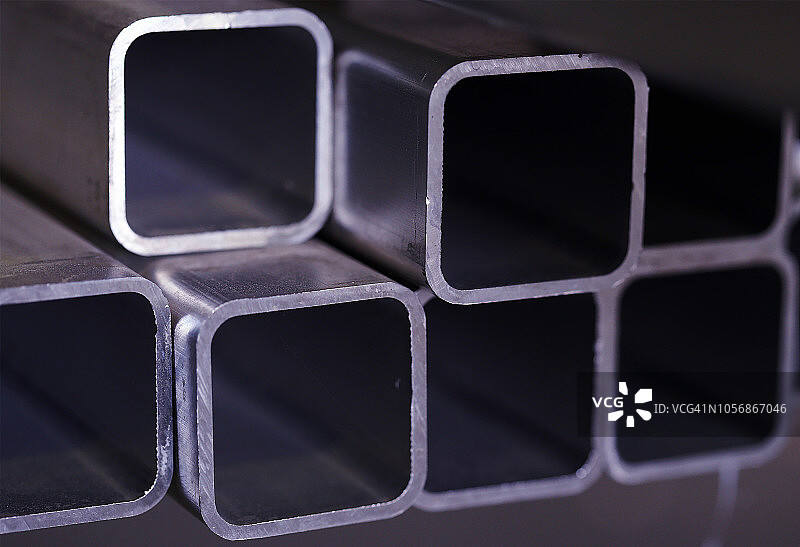
Industrial motors represent the mechanical heart of manufacturing operations worldwide, powering everything from conveyor systems to precision machining equipment. At the core of motor efficiency and longevity lies a critical yet often overlooked component: the bearing assembly. The performance of these bearings depends fundamentally on the material from which they are manufactured, and bearing steel has emerged as the industry standard for a compelling reason. This specialized steel alloy plays an instrumental role in minimizing friction within motor systems, directly impacting energy consumption, operational costs, and equipment reliability across industrial applications.
Understanding how bearing steel reduces friction requires examining both the metallurgical properties of the material and the operational demands of industrial motor environments. Modern industrial motors operate under continuous stress, high rotational speeds, and variable load conditions that generate substantial heat and wear. The friction within motor bearings directly translates to energy loss, heat generation, and accelerated component degradation. By employing bearing steel with precisely engineered characteristics, manufacturers can dramatically reduce these friction-related losses, extending motor life while improving overall system efficiency. This article explores the specific mechanisms through which bearing steel achieves friction reduction and why its material properties make it indispensable in industrial motor applications.
Metallurgical Properties That Enable Friction Reduction
High Carbon Content and Carbide Distribution
The friction-reducing capabilities of bearing steel begin at the molecular level with its distinctive chemical composition. High-quality bearing steel typically contains carbon levels ranging from 0.95% to 1.10%, significantly higher than standard structural steels. This elevated carbon content enables the formation of extremely hard carbide particles throughout the steel matrix during heat treatment processes. These carbides create a wear-resistant surface that maintains its geometry under continuous rolling and sliding contact, preventing the surface irregularities that would otherwise increase friction coefficients in motor bearing applications.
The distribution pattern of these carbides proves equally important as their presence. Through controlled manufacturing processes, bearing steel achieves a fine, uniform carbide dispersion that avoids the clustering that could create stress concentration points. This uniform microstructure ensures consistent friction characteristics across the entire bearing surface, preventing localized hot spots that would accelerate wear and increase energy losses. In industrial motors operating at thousands of revolutions per minute, this microstructural uniformity translates directly to stable, predictable friction behavior throughout the motor's operational life.
Surface Hardness and Contact Stress Management
After proper heat treatment, bearing steel achieves surface hardness values typically ranging from 58 to 65 HRC on the Rockwell scale. This exceptional hardness serves a critical friction-reduction function by minimizing elastic deformation at contact points between bearing races and rolling elements. When softer materials undergo repeated loading cycles, microscopic deformation occurs at contact surfaces, creating energy losses through material hysteresis and increasing the effective friction coefficient. The superior hardness of bearing steel maintains contact geometry integrity, preserving the theoretical point or line contact that minimizes friction area.
This hardness characteristic becomes particularly significant in industrial motors subjected to shock loads or variable torque conditions. During transient loading events, bearing steel resists the surface indentation that would permanently increase friction by creating mechanical interference points. The material's ability to withstand contact stresses exceeding 3,000 MPa without plastic deformation ensures that friction coefficients remain within designed parameters even under demanding operational scenarios. This stress resistance translates to consistent motor efficiency across varying load profiles, a critical requirement in industrial environments where production demands fluctuate throughout operational cycles.
Through-Hardening Capabilities and Core Toughness
Unlike surface-hardened materials that exhibit a soft core beneath a hard exterior, bearing steel can be through-hardened to achieve consistent properties from surface to center. This complete transformation matters for friction management because it prevents subsurface yielding under repeated stress cycles. When bearings experience the millions of load cycles typical in industrial motor applications, subsurface fatigue can alter contact geometry even when surface hardness remains adequate. Through-hardened bearing steel maintains dimensional stability throughout its cross-section, preserving the precise tolerances required for minimal friction operation.
Despite its hardness, properly processed bearing steel retains sufficient core toughness to resist brittle fracture under impact loading. This balance between hardness and toughness prevents the catastrophic failures that would result in sudden friction increases and motor seizure. The material achieves this combination through careful control of alloying elements like chromium, which typically comprises 1.3% to 1.6% of bearing steel composition. These alloying additions enhance hardenability while maintaining the fracture toughness necessary for reliable operation in the demanding environment of industrial motors where vibration and mechanical shock are routine occurrences.
Friction Reduction Mechanisms in Motor Bearing Applications
Maintaining Hydrodynamic Lubrication Films
The smooth, hard surface of bearing steel plays a crucial role in establishing and maintaining hydrodynamic lubrication films between moving components. In properly functioning motor bearings, a microscopic layer of lubricant separates metal surfaces, with friction occurring within the fluid rather than between solid contacts. The surface finish achievable with bearing steel, typically ranging from 0.05 to 0.20 micrometers Ra, provides the smoothness necessary for stable film formation. Surface irregularities would disrupt this protective layer, allowing metal-to-metal contact that dramatically increases friction and wear rates.
The hardness of bearing steel contributes to lubrication film stability by preventing the surface deformation that could squeeze out lubricant under load. During motor operation, contact pressures at bearing interfaces can exceed hundreds of megapascals, generating forces that would deform softer materials and collapse the protective lubricant film. Bearing steel maintains its geometry under these pressures, preserving the clearances necessary for continuous lubrication. This film preservation translates directly to friction reduction, as hydrodynamic lubrication can reduce friction coefficients to values below 0.001, compared to 0.1 or higher for boundary lubrication conditions where metal-to-metal contact occurs.
Minimizing Adhesive Wear and Surface Roughening
Friction in motor bearings increases progressively if bearing surfaces roughen through adhesive wear mechanisms. When dissimilar or poorly matched materials slide against each other, microscopic welding can occur at contact points, with subsequent shearing creating surface irregularities that increase friction. The chemical stability and hardness of bearing steel significantly reduces this adhesive tendency. The chromium content in bearing steel forms a passive oxide layer that inhibits direct metal bonding between surfaces, while the material's hardness prevents the plastic flow necessary for adhesion.
In industrial motors operating continuously for extended periods, bearing steel's resistance to adhesive wear maintains the low friction coefficients established during initial operation. Alternative materials that might seem adequate during short-term testing often exhibit progressive friction increases as their surfaces degrade. Bearing steel demonstrates remarkable stability, with properly maintained bearings showing minimal friction coefficient change even after years of continuous service. This long-term friction stability translates to predictable motor efficiency throughout equipment lifecycles, enabling accurate energy consumption forecasting and maintenance scheduling.
Thermal Conductivity and Heat Dissipation
Friction inevitably generates heat, and bearing steel's thermal properties help manage this energy conversion to minimize further friction increases. The material exhibits thermal conductivity values around 46 W/m·K, sufficient to conduct frictional heat away from contact surfaces toward larger bearing components where it can be dissipated. This heat transfer capability prevents localized temperature spikes that would reduce lubricant viscosity, potentially causing film breakdown and increased friction. In high-speed industrial motors where bearing temperatures can exceed 100°C during normal operation, effective heat dissipation becomes critical for friction management.
The dimensional stability of bearing steel across temperature ranges further contributes to friction control by preventing thermally-induced clearance changes. Materials with high thermal expansion coefficients experience significant dimensional changes as temperature fluctuates, potentially causing bearing preload variations that alter friction characteristics. Bearing steel's relatively low thermal expansion coefficient of approximately 12 × 10⁻⁶ per °C maintains consistent clearances across operating temperature ranges. This thermal stability ensures that friction coefficients remain within design parameters whether motors are starting cold or operating at steady-state elevated temperatures, providing consistent efficiency across all operational phases.
Engineering Design Factors Optimized by Bearing Steel Properties
Precision Manufacturing and Dimensional Accuracy
The friction-reducing benefits of bearing steel extend beyond material properties to enable the precision manufacturing critical for minimal-friction bearing designs. The material's consistent hardness and machinability allow manufacturers to achieve the tight tolerances necessary for optimized bearing geometry. Rolling element bearings designed for industrial motors typically require dimensional accuracies within a few micrometers, with surface finishes measured in tenths of micrometers. Bearing steel can be machined and ground to these exacting specifications, then maintain those dimensions through heat treatment processes when proper techniques are employed.
This dimensional precision directly impacts friction by ensuring proper load distribution across all rolling elements. In a motor bearing assembly, unequal loading due to dimensional variations causes some elements to carry disproportionate loads, increasing local friction and accelerating wear. Bearing steel components manufactured to appropriate tolerances distribute loads evenly, minimizing total friction across the bearing assembly. The material's stability during grinding operations allows manufacturers to achieve the geometric accuracy required for this load distribution, a feat difficult or impossible with materials that exhibit work hardening or unpredictable grinding behavior.
Surface Finish Optimization for Lubricant Retention
Beyond smoothness, bearing steel surfaces can be finished with specific textures that optimize lubricant retention while minimizing friction. Modern bearing manufacturing employs superfinishing processes that create surface topographies with precisely controlled characteristics. These surfaces feature shallow valleys that retain lubricant while maintaining peak heights low enough to avoid interference during operation. The hardness of bearing steel allows these surface features to persist throughout bearing life rather than wearing away during initial operation as they might on softer materials.
The surface finish achievable with bearing steel enables manufacturers to optimize friction for specific motor applications. High-speed motors benefit from exceptionally smooth finishes that minimize fluid friction within lubricants, while heavily loaded applications might employ slightly textured surfaces that enhance lubricant film formation. Bearing steel's consistent response to finishing processes allows this application-specific optimization, ensuring that industrial motors achieve minimum friction for their particular operational parameters. This customization capability represents a significant advantage over materials that cannot maintain controlled surface finishes under bearing operating conditions.
Bearing Geometry Configurations Enabled by Material Strength
The mechanical strength of bearing steel enables bearing designs that inherently produce lower friction than would be possible with weaker materials. Thin-section bearings, which reduce friction by minimizing the mass of rotating components and reducing contact stresses through optimized geometry, require materials that maintain structural integrity despite reduced cross-sections. Bearing steel's strength-to-weight ratio allows designers to create these efficient bearing configurations without compromising reliability, reducing rotational inertia and associated frictional losses in motor applications.
Similarly, the material properties of bearing steel support the use of smaller rolling elements that reduce friction through decreased contact areas and lower centrifugal forces at high speeds. In industrial motors operating at elevated RPM, centrifugal effects on bearing balls or rollers create additional contact forces that increase friction beyond static load requirements. Bearing steel's strength allows the use of optimally sized rolling elements that balance load capacity against friction minimization, an optimization impossible with materials requiring oversized components for adequate strength. This design flexibility translates directly to motor efficiency improvements measurable in both energy consumption and operational temperature.
Operational Longevity and Sustained Friction Performance
Fatigue Resistance and Contact Stress Cycling
Industrial motors often operate continuously for years, subjecting bearings to billions of stress cycles. Bearing steel's exceptional fatigue resistance ensures that friction characteristics remain stable throughout these extended service periods. The material resists the subsurface crack initiation that leads to spalling failures, maintaining smooth contact surfaces essential for low friction operation. Standard bearing steel grades demonstrate fatigue lives exceeding one million stress cycles at contact pressures approaching material limits, providing the durability necessary for industrial motor applications where bearing replacement would require costly production shutdowns.
This fatigue resistance prevents the progressive friction increases associated with bearing degradation. As bearings approach the end of their fatigue life, subsurface cracking can alter contact mechanics even before visible surface damage appears, increasing friction and operational temperatures. Bearing steel's microstructural stability delays this degradation, maintaining design friction coefficients throughout the bearing's useful life. In industrial settings where motor efficiency directly impacts production costs, this sustained performance provides economic value beyond the initial friction reduction, contributing to lower total cost of ownership through extended maintenance intervals and consistent energy consumption.
Corrosion Resistance and Environmental Stability
While not stainless, bearing steel exhibits sufficient corrosion resistance for most industrial motor environments when properly protected by lubricants and seals. The chromium content that enhances hardenability also provides a degree of oxidation resistance that prevents the surface pitting and roughening that would increase friction. In motor applications where moisture or contamination might reach bearing surfaces, bearing steel maintains its surface integrity better than low-alloy alternatives, preserving the smooth geometry essential for minimal friction operation.
This environmental stability becomes particularly important in industrial facilities where temperature cycling causes condensation or where process atmospheres contain corrosive elements. Bearing steel resists the gradual surface degradation that would otherwise increase friction over time, maintaining motor efficiency even in challenging environments. The material's balance of hardness and corrosion resistance eliminates the need for exotic coatings or treatments that might alter surface characteristics, allowing straightforward bearing designs that achieve friction reduction through fundamental material properties rather than complex surface engineering.
Wear Debris Management and System Contamination
The wear resistance of bearing steel contributes to friction reduction indirectly by minimizing the generation of metallic debris that could contaminate lubrication systems and increase friction elsewhere in motor assemblies. Materials that wear more readily produce particles that circulate through lubricants, potentially causing abrasive damage to seals, secondary bearings, and other components. Bearing steel's hardness and wear resistance keep particle generation to minimal levels, maintaining lubricant cleanliness and preventing the secondary friction increases associated with contaminated lubrication systems.
In closed lubrication systems common in industrial motors, this debris minimization extends overall system life while maintaining efficiency. Contaminated lubricants exhibit higher friction coefficients and reduced film-forming capabilities, negating the friction-reduction benefits of precision bearing design. By generating minimal wear debris throughout its service life, bearing steel preserves lubricant properties, ensuring that hydrodynamic lubrication films remain stable and effective. This system-level contribution to friction management represents a frequently overlooked benefit of bearing steel in motor applications, demonstrating how material selection impacts performance beyond the immediate component level.
Comparative Performance in Industrial Motor Environments
Friction Coefficient Stability Across Operating Conditions
Industrial motors experience widely varying operational conditions, from startup torque requirements through continuous operation at rated speeds and occasional overload situations. Bearing steel demonstrates remarkable friction coefficient stability across this operational spectrum, maintaining predictable performance regardless of instantaneous loading or speed conditions. This stability stems from the material's consistent hardness and minimal property changes across the temperature ranges encountered in motor applications. Alternative materials often exhibit friction characteristics that vary significantly with temperature or load, complicating motor design and potentially causing efficiency losses under specific operating conditions.
The practical significance of this friction stability appears most clearly in variable-speed drive applications where motors operate across wide RPM ranges. Bearing steel maintains appropriate friction coefficients whether motors run at 10% of rated speed or at maximum RPM, ensuring efficient operation throughout the control range. Materials that exhibit speed-dependent friction characteristics would require control system compensation or accept efficiency penalties at certain operating points. The predictable friction behavior of bearing steel simplifies motor design while optimizing performance across all operational scenarios encountered in industrial applications.
Performance Under Contamination and Adverse Conditions
Real-world industrial environments rarely provide the pristine conditions assumed in laboratory testing. Bearing steel's hardness provides significant advantages when contamination inevitably reaches bearing surfaces despite sealing efforts. Hard particulates that might embed in softer bearing materials simply bounce off or cause minimal surface disturbance when encountering bearing steel, preventing the friction increases associated with contamination damage. This contamination resistance translates to more forgiving operational characteristics, maintaining acceptable friction levels even when maintenance intervals extend beyond ideal scheduling or when operating environments prove more challenging than initially anticipated.
The material's performance under marginal lubrication conditions further demonstrates its friction-management capabilities. When lubricant supply interruptions or degraded lubricant properties compromise ideal hydrodynamic conditions, bearing steel's inherent low friction characteristics and wear resistance provide a safety margin that prevents catastrophic friction increases. While not intended for dry operation, bearings manufactured from bearing steel tolerate brief lubrication deficiencies that would cause immediate seizure with less capable materials. This operational resilience contributes to motor reliability in industrial settings where unexpected conditions occasionally arise despite best maintenance practices.
Energy Efficiency Implications for Industrial Operations
The friction reductions enabled by bearing steel translate directly to measurable energy savings in industrial motor installations. Bearing friction typically accounts for 20% to 30% of total motor losses in efficient modern designs, making it a significant contributor to overall system efficiency. By minimizing this friction component through appropriate material selection, bearing steel enables motor efficiency improvements of 1% to 3% compared to bearings manufactured from less optimal materials. In large industrial facilities operating hundreds of motors consuming megawatts of power continuously, these percentage improvements represent substantial annual energy cost savings.
Beyond direct energy savings, the reduced friction provided by bearing steel decreases thermal loading on motor cooling systems and extends lubricant life by reducing thermal degradation. These secondary benefits compound the primary friction reduction, creating system-level efficiency improvements that exceed simple bearing friction calculations. Industrial operations conducting total cost of ownership analyses increasingly recognize these comprehensive benefits, understanding that bearing steel's contribution to friction reduction delivers value throughout motor lifecycles rather than merely reducing initial power consumption measurements.
FAQ
What makes bearing steel more effective than regular steel at reducing friction in motor bearings?
Bearing steel contains significantly higher carbon content and specific alloying elements like chromium that enable it to achieve much greater hardness through heat treatment compared to regular structural steels. This exceptional hardness, typically 58-65 HRC, minimizes surface deformation under the enormous contact stresses in motor bearings, maintaining the precise geometry necessary for minimal friction. Additionally, bearing steel can be manufactured with extremely smooth surface finishes and uniform microstructures that support stable hydrodynamic lubrication films. Regular steel lacks the hardness to prevent progressive surface damage and the metallurgical uniformity required for consistent friction performance throughout millions of operational cycles in demanding motor applications.
How does bearing steel maintain its friction-reducing properties throughout years of continuous motor operation?
The through-hardened structure and fatigue resistance of bearing steel allow it to withstand billions of stress cycles without developing the subsurface cracking or surface degradation that would increase friction over time. Unlike surface-treated materials where protective layers might wear away, bearing steel exhibits consistent properties from surface to core, preventing the dimensional changes that would alter bearing clearances and increase friction. The material's corrosion resistance and wear resistance also minimize the generation of surface roughness or contaminating debris that could compromise lubrication effectiveness, allowing properly maintained bearings to deliver stable friction performance throughout service lives spanning decades in industrial motor installations.
Can bearing steel reduce friction sufficiently to eliminate the need for lubrication in industrial motors?
No, bearing steel cannot eliminate the need for lubrication in industrial motors despite its excellent friction-reducing properties. While bearing steel provides lower friction than alternative materials under dry conditions, unlubricated metal-to-metal contact would still generate friction coefficients several orders of magnitude higher than properly lubricated operation. Lubrication remains essential for creating the hydrodynamic films that enable the extremely low friction coefficients necessary for efficient motor operation. However, bearing steel's properties optimize the effectiveness of lubrication by maintaining the smooth, hard surfaces required for stable film formation and by resisting the wear that would otherwise compromise lubrication performance, making the lubricant-bearing steel combination far more effective than either element alone.
What operational indicators suggest that bearing steel friction performance is degrading in motor applications?
Several operational symptoms indicate degrading friction performance in motor bearings manufactured from bearing steel. Increasing motor operating temperatures despite constant load conditions suggest rising friction losses converting additional energy to heat. Unusual noise or vibration patterns often indicate surface damage that disrupts smooth rolling contact and increases friction. Rising power consumption at constant output levels directly reflects increased frictional losses, while decreasing motor efficiency measurements quantify the friction degradation. Oil analysis revealing increased metallic wear particles indicates bearing surface deterioration that typically accompanies friction increases. Monitoring these indicators allows maintenance teams to detect bearing problems before catastrophic failures occur, enabling planned replacements that minimize production disruptions while maintaining motor efficiency.
Table of Contents
- Metallurgical Properties That Enable Friction Reduction
- Friction Reduction Mechanisms in Motor Bearing Applications
- Engineering Design Factors Optimized by Bearing Steel Properties
- Operational Longevity and Sustained Friction Performance
- Comparative Performance in Industrial Motor Environments
-
FAQ
- What makes bearing steel more effective than regular steel at reducing friction in motor bearings?
- How does bearing steel maintain its friction-reducing properties throughout years of continuous motor operation?
- Can bearing steel reduce friction sufficiently to eliminate the need for lubrication in industrial motors?
- What operational indicators suggest that bearing steel friction performance is degrading in motor applications?