
 EN
EN
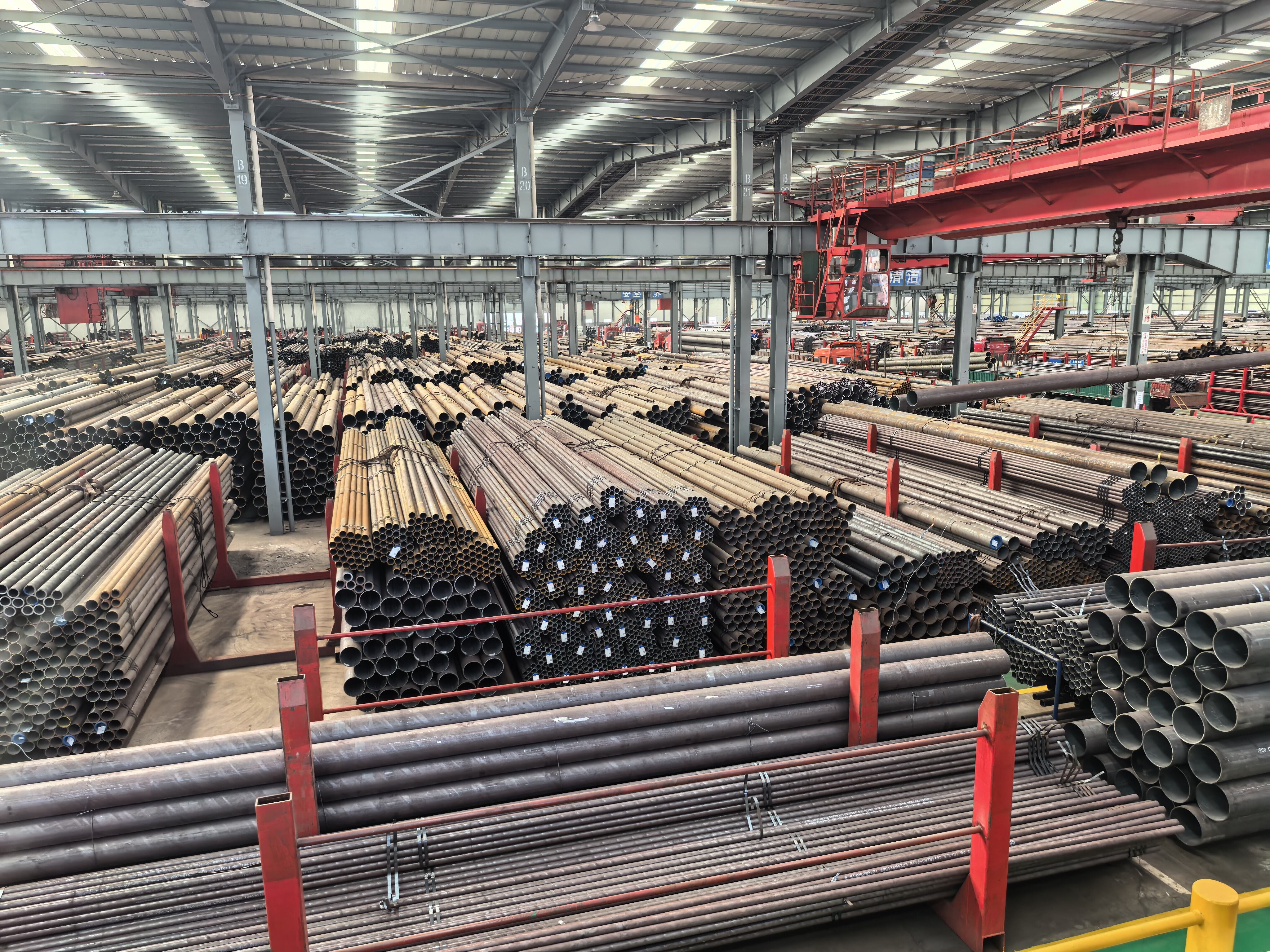
Engineering projects operating in extreme environments demand materials that can withstand conditions far beyond standard industrial applications. Custom seamless steel pipe engineering represents a specialized discipline focused on designing, selecting, and manufacturing tubular products capable of performing reliably under the most demanding circumstances. These environments include ultra-high temperatures, extreme pressures, corrosive atmospheres, cryogenic conditions, and combinations of multiple stressors that would cause conventional piping systems to fail catastrophically. The engineering approach for seamless steel pipe in extreme environments requires deep material science knowledge, precise manufacturing control, rigorous quality assurance protocols, and comprehensive understanding of how metallurgical properties interact with operational stresses.
The fundamental advantage of seamless steel pipe construction becomes critical when operating conditions push material performance to its limits. Unlike welded alternatives that introduce longitudinal or spiral seams creating potential weak points, seamless manufacturing produces uniform grain structure and consistent mechanical properties throughout the pipe circumference. This structural integrity becomes absolutely essential when a single point of failure could result in catastrophic consequences including loss of containment, environmental disasters, or facility shutdowns costing millions in lost production. Custom engineering for extreme environments goes beyond simply selecting thicker walls or higher-grade materials—it involves comprehensive system design that accounts for thermal expansion, pressure cycling, corrosion mechanisms, fatigue loading, and long-term microstructural stability under sustained exposure to hostile conditions.
Material Selection Engineering for Extreme Service Conditions
Alloy Chemistry Optimization for Temperature Resistance
The foundation of custom seamless steel pipe engineering for extreme environments begins with precise alloy chemistry selection tailored to specific operational parameters. High-temperature applications such as superheated steam systems, reformer furnaces, and petrochemical crackers require alloy grades with exceptional creep resistance and oxidation stability. Advanced ferritic alloys containing chromium and molybdenum additions provide the metallurgical foundation for sustained performance above 500°C, with grades like P91 and P92 offering creep-rupture strength that remains stable during decades of continuous exposure to elevated temperatures combined with internal pressures.
Custom engineering evaluates not just the nominal operating temperature but the complete thermal profile including startup transients, emergency shutdown scenarios, and localized hot spots created by process conditions. The seamless steel pipe material must maintain adequate strength margins throughout these thermal excursions while avoiding microstructural transformations that degrade long-term reliability. Chromium content typically ranges from 2.25% to 9% depending on the maximum service temperature and oxidation environment, while molybdenum additions between 0.5% and 1% enhance solid-solution strengthening and improve resistance to hydrogen attack at elevated temperatures.
Pressure Rating Engineering and Wall Thickness Calculation
Extreme pressure environments demand engineering calculations that go far beyond standard pressure vessel code minimums. Custom seamless steel pipe design for applications experiencing pressures exceeding 10,000 psi requires detailed finite element analysis accounting for stress concentrations, fatigue from pressure cycling, and the interaction between internal pressure and external loads. The engineering process determines optimal wall thickness by balancing mechanical strength requirements against thermal mass considerations, fluid flow efficiency, and weight constraints in applications where pipe routing involves elevated structures or suspended spans.
Advanced seamless steel pipe manufacturing enables production of heavy-wall constructions with wall thicknesses exceeding 100mm while maintaining tight dimensional tolerances and uniform mechanical properties from inside to outside diameter. The absence of a weld seam eliminates concerns about heat-affected zone softening or fusion line defects that compromise pressure containment capability. Engineering calculations incorporate safety factors appropriate to the consequence classification of the system, with critical applications requiring burst pressure margins of 400% or more above maximum allowable working pressure combined with leak-before-break design philosophy.
Corrosion Resistance Engineering and Environmental Compatibility
Extreme environments frequently combine elevated temperatures and pressures with chemically aggressive fluids that attack piping materials through multiple degradation mechanisms. Custom seamless steel pipe engineering must address uniform corrosion, pitting, stress corrosion cracking, hydrogen embrittlement, sulfidation, carburization, and other environment-specific attack modes. The material selection process evaluates the complete process chemistry including trace contaminants that may concentrate during operation and create localized aggressive conditions far more severe than the bulk fluid composition suggests.
For applications involving sour gas service with hydrogen sulfide concentrations, seamless steel pipe engineering incorporates strict limits on material hardness, sulfur content, and inclusion morphology to prevent sulfide stress cracking. High-alloy grades with nickel additions provide resistance to chloride stress corrosion cracking in environments containing halides at elevated temperatures. The engineering approach recognizes that corrosion allowances alone cannot ensure reliable performance—the fundamental metallurgical structure must possess intrinsic resistance to the specific attack mechanisms present in the operating environment. This often requires custom heat treatment protocols that optimize grain size, carbide precipitation patterns, and residual stress profiles.
Manufacturing Process Engineering for Extreme Environment Applications
Hot Working and Grain Structure Control
The manufacturing route for seamless steel pipe intended for extreme environments requires precise control over hot working parameters to develop optimal microstructures. The rotary piercing and pilgering processes that form the seamless tube from solid billet must be engineered to achieve complete recrystallization, uniform grain refinement, and elimination of centerline segregation that could create weak zones susceptible to failure under extreme conditions. Deformation temperature, reduction ratios, and interpass reheating schedules are customized based on the specific alloy chemistry to promote fine-grained structures with homogeneous carbide distribution.
Advanced seamless steel pipe manufacturing for extreme service incorporates real-time process monitoring and statistical process control to ensure every pipe section receives consistent thermomechanical treatment. The absence of welding operations eliminates concerns about weld metal chemistry variations, heat-affected zone microstructures, and residual stresses from fusion welding that compromise performance in demanding applications. This manufacturing advantage becomes particularly significant when the seamless steel pipe must maintain reliable performance through thousands of thermal cycles or decades of continuous high-temperature exposure where microstructural stability directly determines service life.
Heat Treatment Engineering for Property Optimization
Custom heat treatment protocols represent a critical engineering tool for tailoring seamless steel pipe properties to match specific extreme environment requirements. Normalizing treatments refine grain size and homogenize microstructure, while tempering operations adjust the balance between strength and toughness. For advanced alloy grades serving in creep-limited applications, precise austenitizing temperatures and controlled cooling rates establish optimal carbide precipitation patterns that provide resistance to microstructural coarsening during long-term elevated temperature exposure.
Post-weld heat treatment requirements for field joints connecting sections of seamless steel pipe in extreme service must be engineered as part of the complete system design. The base metal properties established during manufacturing must remain compatible with the thermal cycles imposed during construction welding and subsequent stress relief operations. Engineering specifications define acceptable property ranges rather than single-point targets, recognizing that real-world variability in heat treatment parameters will produce corresponding property distributions that must remain within acceptable limits for safe operation throughout the intended service life.
Quality Assurance and Non-Destructive Examination Protocols
Seamless steel pipe destined for extreme environments requires comprehensive quality verification programs that exceed standard industrial inspection practices. Ultrasonic examination with specialized transducer configurations detects internal discontinuities including inclusions, laminations, and centerline porosity that could serve as crack initiation sites under cyclic loading. Eddy current testing identifies surface and near-surface defects while magnetic particle inspection reveals fine cracks that might escape detection through visual examination alone.
Custom engineering of inspection protocols considers the specific failure mechanisms most likely in the intended service environment and implements examination techniques specifically sensitive to those defect types. Pressure testing to levels significantly exceeding design pressure provides verification of structural integrity while revealing any manufacturing defects that compromise pressure containment capability. Material traceability systems ensure complete documentation linking each length of seamless steel pipe to specific melt chemistry, heat treatment records, and mechanical test results, enabling root cause analysis if unexpected service issues arise and providing the foundation for reliable long-term asset integrity management.
Application-Specific Design Considerations for Hostile Operating Conditions
Thermal Cycling and Fatigue Life Engineering
Many extreme environment applications subject seamless steel pipe to repetitive thermal cycles that generate cyclic stresses through differential thermal expansion. Power generation systems experiencing daily startup and shutdown cycles, chemical processes with batch operations, and offshore platforms with weather-dependent production create fatigue loading conditions that must be explicitly addressed through engineering analysis. The design approach evaluates accumulated fatigue damage over the intended service life considering both low-cycle fatigue from major thermal transients and high-cycle fatigue from vibration or pressure pulsations.
Custom seamless steel pipe engineering for cyclic service incorporates material selection favoring fine-grained microstructures with superior fatigue crack initiation resistance and heat treatment protocols that minimize residual stresses. Geometric design eliminates unnecessary stress concentrations while piping system layout minimizes constraint that would amplify thermally induced stresses. The engineering calculations account for mean stress effects, multiaxial stress states, and environmental influences on crack propagation rates to establish inspection intervals ensuring detection of any fatigue cracking before it reaches critical dimensions.
Cryogenic Temperature Performance Engineering
Extreme low-temperature environments present distinct engineering challenges requiring seamless steel pipe materials that maintain adequate fracture toughness at temperatures approaching absolute zero. Liquefied natural gas facilities, industrial gas production plants, and aerospace applications demand materials that avoid ductile-to-brittle transition behavior at cryogenic temperatures. Custom engineering selects austenitic stainless steel grades or specialized nickel alloys with face-centered cubic crystal structures that inherently maintain toughness regardless of temperature.
The seamless steel pipe system design for cryogenic service addresses thermal contraction during cooldown, potential for cold embrittlement from cyclic exposure, and the risk of brittle fracture propagation if cracks initiate. Engineering specifications mandate Charpy impact testing at temperatures below the minimum design metal temperature with acceptance criteria ensuring adequate absorbed energy to prevent catastrophic brittle fracture. Welding procedures for joining seamless steel pipe in cryogenic applications receive extensive qualification testing to verify that weld metal and heat-affected zones maintain base metal toughness levels throughout the anticipated service temperature range.
Erosion and Flow-Induced Degradation Resistance
Extreme flow velocities, abrasive particle-laden fluids, and cavitation conditions create erosive wear mechanisms that progressively thin seamless steel pipe walls and generate potential leak paths. Custom engineering for erosive service conditions evaluates fluid dynamics including flow regime, particle characteristics, and impact angles to predict erosion rates and establish appropriate corrosion allowances. Material selection may specify hardened grades, overlay cladding, or ceramic liners depending on the severity of erosive conditions and economic service life targets.
The inherent structural uniformity of seamless steel pipe provides advantages in erosive applications by eliminating preferential attack at weld seams where microstructural variations create localized soft zones. Engineering design optimizes piping geometry to minimize turbulence, eliminates dead legs where solids accumulate, and ensures adequate wall thickness to withstand predicted erosion while maintaining structural integrity. Inspection programs incorporate thickness monitoring at predetermined erosion-prone locations enabling trending analysis that validates design assumptions and supports informed decisions about remaining service life and replacement timing.
Integration of Custom Seamless Steel Pipe into Extreme Environment Systems
System-Level Engineering and Interface Management
Successful deployment of seamless steel pipe in extreme environments requires comprehensive system engineering that addresses interfaces between piping and connected equipment, transitions between different material grades, and interactions with structural supports and restraints. The engineering process develops detailed stress analysis models incorporating actual equipment nozzle loads, thermal expansion movements, and dynamic effects from fluid transients. These analyses identify locations requiring reinforcement, special fittings, or expansion joints to maintain stress levels within allowable limits throughout all operating modes.
Custom seamless steel pipe specifications establish consistent material properties, dimensional tolerances, and surface finish requirements enabling efficient field construction while ensuring compatibility with welding procedures, threading operations, or mechanical joining systems. The engineering documentation provides fabricators and construction contractors with clear guidance on handling requirements, storage conditions, and installation practices that preserve the carefully engineered properties established during manufacturing. Traceability systems track each pipe section from manufacturing through installation enabling complete as-built documentation supporting future maintenance and modification activities.
Predictive Life Assessment and Asset Integrity Programs
Operating seamless steel pipe in extreme environments demands proactive asset integrity management programs that monitor condition, predict remaining life, and schedule interventions before degradation reaches critical levels. Custom engineering establishes the technical foundation for these programs by defining damage mechanisms, identifying critical locations, and specifying appropriate inspection techniques. Time-dependent degradation processes including creep deformation, oxidation scaling, and corrosion wastage require periodic assessment through dimensional measurements, hardness testing, and metallographic replication to detect early warning signs of approaching end-of-life conditions.
Advanced seamless steel pipe systems may incorporate permanent monitoring instrumentation including temperature sensors, strain gauges, and acoustic emission detectors providing continuous surveillance of operating conditions and early detection of abnormal behavior. The engineering approach integrates inspection data with fitness-for-service evaluation methodologies enabling quantitative assessment of whether detected flaws or measured degradation compromise safe operation. This risk-based approach optimizes inspection intervals and repair decisions balancing safety imperatives against operational availability and maintenance cost considerations.
Life Extension and Performance Upgrade Strategies
Many extreme environment installations face situations where original seamless steel pipe approaches the end of its design life but the facility requires continued operation for economic reasons. Custom engineering supports life extension programs through detailed remaining life assessment, targeted replacement of critical sections with upgraded materials, and implementation of operational modifications reducing degradation rates. Advanced inspection techniques including ultrasonic thickness mapping and phased-array imaging provide detailed condition assessment enabling informed decisions about continued fitness for service.
In some cases, seamless steel pipe systems originally designed for less demanding conditions require upgrading to accommodate more extreme operating parameters driven by process intensification or feedstock changes. Engineering analysis determines whether existing pipe can safely accommodate higher pressures or temperatures with appropriate deration factors, or whether complete replacement with higher-grade seamless steel pipe becomes necessary. The upgrade engineering process considers not just the pipe itself but all associated components including fittings, flanges, valves, and support systems ensuring the complete system safely handles the more demanding service conditions.
FAQ
What makes seamless steel pipe essential for extreme environment applications compared to welded alternatives?
Seamless steel pipe provides uniform mechanical properties throughout the entire pipe circumference without introducing the longitudinal or spiral weld seams that create potential weak points in welded pipe. In extreme environments involving high pressures, elevated temperatures, or aggressive corrosion conditions, these weld seams represent locations where material properties may be compromised through heat-affected zone softening, incomplete fusion, or preferential corrosion attack. The absence of welds eliminates these concerns and provides consistent structural integrity essential for applications where a single point of failure could produce catastrophic consequences. Additionally, seamless manufacturing enables better control over grain structure and inclusion distribution, producing more predictable long-term performance under sustained extreme conditions.
How does custom engineering differ from simply ordering standard seamless steel pipe in higher grades?
Custom seamless steel pipe engineering involves comprehensive system-level design specifically tailored to the actual operating conditions rather than applying generic catalog specifications. This includes detailed stress analysis accounting for thermal expansion, pressure cycling, and external loads; selection of optimal alloy chemistry and heat treatment for the specific combination of temperature, pressure, and corrosive environment; specification of enhanced inspection protocols targeting the most probable failure mechanisms; and integration with overall facility design ensuring compatibility with connected equipment and support structures. Standard pipe grades provide general capabilities suitable for common applications, but extreme environments demand engineering analysis verifying that every aspect of material properties, dimensional characteristics, and quality verification specifically addresses the unique challenges of the intended service.
What are the typical lead times and cost implications for custom seamless steel pipe in extreme environment grades?
Custom seamless steel pipe for extreme environments typically requires extended manufacturing lead times ranging from twelve to twenty-four weeks depending on alloy complexity, dimensional requirements, and quality verification protocols. The specialized alloy chemistry, controlled hot working processes, and comprehensive testing programs add substantial cost compared to commodity pipe grades, with premium alloys for the most demanding applications costing three to five times more than standard carbon steel equivalents. However, these costs must be evaluated against the total installed system cost including engineering, fabrication, installation, and most importantly the potential consequences of premature failure in extreme service. The superior reliability and extended service life of properly engineered seamless steel pipe typically provides compelling economic value despite higher initial material costs.
Can existing seamless steel pipe systems be evaluated for suitability in more extreme conditions than originally designed?
Existing seamless steel pipe systems can undergo fitness-for-service evaluation to determine whether they can safely accommodate more demanding operating conditions than originally specified. This engineering assessment involves comprehensive inspection to establish current condition including wall thickness measurements, hardness testing to detect material degradation, and non-destructive examination for crack detection. The evaluation then applies advanced stress analysis incorporating actual operating history, measured material properties, and updated design codes to determine safe operating limits. In many cases, existing seamless steel pipe can be qualified for moderately increased pressures or temperatures with appropriate safety factor reductions, though substantial increases in severity typically require pipe replacement with higher-grade materials specifically engineered for the more extreme environment.
Table of Contents
- Material Selection Engineering for Extreme Service Conditions
- Manufacturing Process Engineering for Extreme Environment Applications
- Application-Specific Design Considerations for Hostile Operating Conditions
- Integration of Custom Seamless Steel Pipe into Extreme Environment Systems
-
FAQ
- What makes seamless steel pipe essential for extreme environment applications compared to welded alternatives?
- How does custom engineering differ from simply ordering standard seamless steel pipe in higher grades?
- What are the typical lead times and cost implications for custom seamless steel pipe in extreme environment grades?
- Can existing seamless steel pipe systems be evaluated for suitability in more extreme conditions than originally designed?