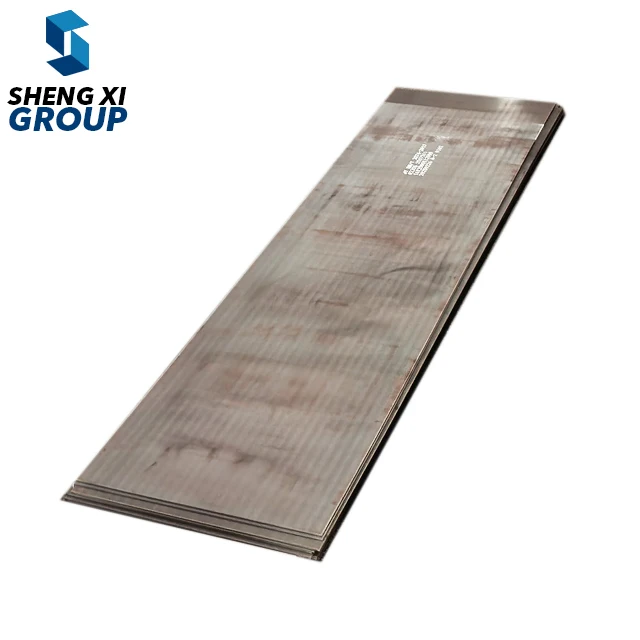
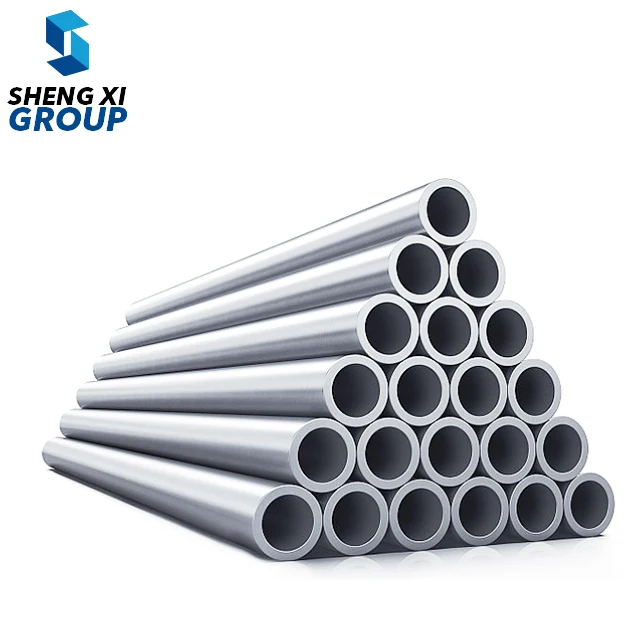
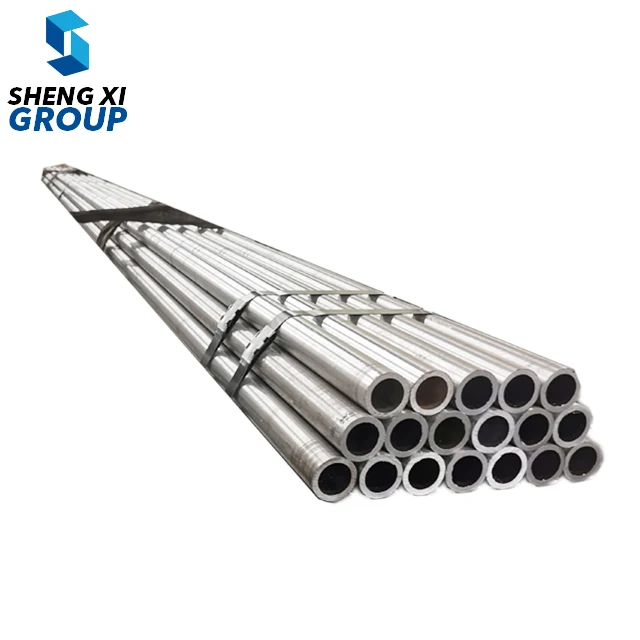
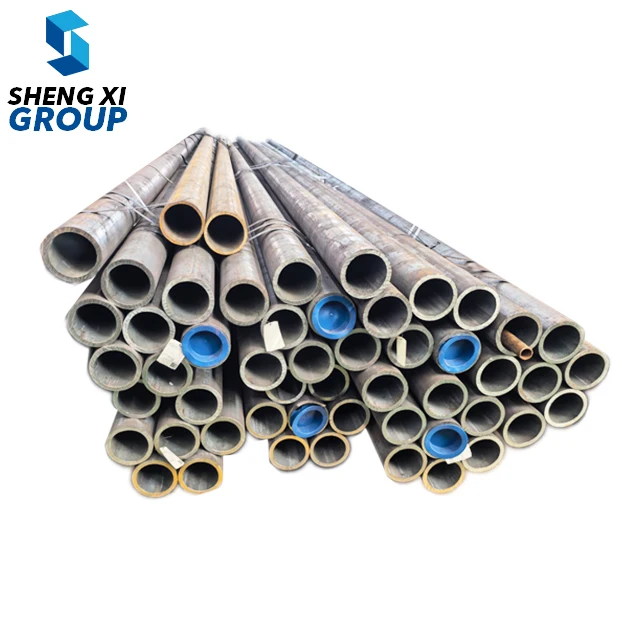
4340 Steel: High-Strength Alloy Steel for Superior Performance and Reliability

All Categories

4340steel

4340 steel stands as one of the most versatile and reliable alloy steels in modern manufacturing and engineering applications. This low-alloy steel combines nickel, chromium, and molybdenum to create a material that delivers exceptional strength, toughness, and durability across diverse industrial sectors. The numerical designation 4340 refers to its specific chemical composition, where the steel contains approximately 0.40 percent carbon, 1.65-2.00 percent nickel, 0.70-0.90 percent chromium, and 0.20-0.30 percent molybdenum. This carefully balanced composition makes 4340 steel an ideal choice for applications requiring high performance under extreme conditions. The steel exhibits remarkable hardenability, allowing manufacturers to achieve consistent mechanical properties throughout thick sections. Its microstructure can be precisely controlled through heat treatment processes, enabling engineers to tailor the material properties to specific application requirements. 4340 steel demonstrates excellent fatigue resistance, making it suitable for components subjected to cyclic loading and stress variations. The material maintains its structural integrity under dynamic conditions, which explains its widespread adoption in automotive, aerospace, and heavy machinery industries. Manufacturing processes benefit from 4340 steel's excellent machinability in the annealed condition, while its weldability allows for complex fabrication requirements. The steel responds favorably to various surface treatments, including nitriding, carburizing, and flame hardening, which further enhance its performance characteristics. Quality control measures ensure consistent chemical composition and mechanical properties across production batches. 4340 steel's versatility extends to both small precision components and large structural elements, making it a preferred material choice for engineers seeking reliable performance. The steel's ability to maintain strength at elevated temperatures adds to its appeal in demanding applications where thermal stability is crucial.


New Product Recommendations

The primary advantage of 4340 steel lies in its exceptional strength-to-weight ratio, which enables manufacturers to design lighter components without compromising structural integrity. This characteristic proves invaluable in aerospace applications where weight reduction directly translates to fuel efficiency and improved performance. The steel's deep hardenability ensures uniform hardness distribution even in thick sections, eliminating the need for complex heat treatment procedures that could introduce distortion or residual stresses. Manufacturing costs decrease significantly because 4340 steel requires fewer processing steps compared to other high-strength materials, while maintaining superior mechanical properties. The material's excellent machinability in the annealed condition allows for efficient production using conventional machine tools, reducing tooling costs and extending cutting tool life. Quality assurance becomes more straightforward with 4340 steel due to its predictable response to heat treatment and consistent mechanical properties across different production lots. The steel's resistance to hydrogen embrittlement makes it suitable for applications involving exposure to hydrogen-rich environments, where other materials might fail catastrophically. Fabrication flexibility increases dramatically because 4340 steel can be easily welded using standard welding procedures without requiring special preheating or post-weld heat treatment in many applications. Cost-effectiveness emerges from the steel's long service life and minimal maintenance requirements, reducing total ownership costs over the component's operational lifetime. The material's availability from multiple suppliers worldwide ensures stable pricing and reliable supply chains, critical factors for large-scale manufacturing operations. Design engineers appreciate 4340 steel's proven track record and extensive database of mechanical properties, which simplifies the design process and reduces development time. The steel's compatibility with various surface treatments provides additional customization options to meet specific performance requirements without changing the base material. Inventory management becomes more efficient because a single grade of 4340 steel can serve multiple applications, reducing the need to stock numerous specialized alloys.

Tips And Tricks

Strength and Durability of Alloy Steel

08

Jul

Strength and Durability of Alloy Steel

What is Alloy Steel? Alloy steel, integral to various industrial applications, is fundamentally a mixture of iron enhanced with key elements such as carbon, manganese, chromium, and nickel. Each of these elements plays a specific role in augmenting ...
View More
Top Industrial Applications for Cr-Mo Steel

27

Aug

Top Industrial Applications for Cr-Mo Steel

Understanding the Role of Cr-Mo Steel in Industry The industrial sector consistently demands materials that combine strength, durability, and resistance to extreme environments. Cr-Mo Steel has emerged as a preferred alloy across industries because o...
View More
Why High Speed Steel Is Essential for Cutting Tools

27

Aug

Why High Speed Steel Is Essential for Cutting Tools

The Revolutionary Impact of High Speed Steel in Modern Manufacturing In the realm of industrial manufacturing and metalworking, high speed steel has established itself as an indispensable material that revolutionized the way we approach cutting opera...
View More
Development trends of high-strength steel

22

Sep

Development trends of high-strength steel

The Evolution of Advanced Steel Manufacturing The metallurgical industry has witnessed a remarkable transformation in recent decades, with high-strength steel emerging as a cornerstone of modern manufacturing. This innovative material has revolutioni...
View More

Get a Free Quote

Our representative will contact you soon.
Email
Name
Company Name
Message
0/1000

4340steel

Superior Toughness and Impact Resistance

Superior Toughness and Impact Resistance

The outstanding toughness of 4340 steel sets it apart from conventional carbon steels and many other alloy steels, making it the preferred choice for applications where impact resistance is paramount. This exceptional toughness results from the steel's carefully optimized nickel content, which enhances the material's ability to absorb energy during sudden loading or impact events. The nickel addition creates a more refined grain structure that inhibits crack propagation and improves the steel's resistance to brittle fracture. Engineering applications benefit tremendously from this characteristic, particularly in automotive components such as drive shafts, axles, and connecting rods where sudden shock loads are common. The steel maintains its toughness across a wide temperature range, ensuring reliable performance in both arctic and elevated temperature environments. Manufacturing processes take advantage of this toughness during forming operations, as the material can withstand severe deformation without developing internal defects or stress concentrations. Quality testing consistently demonstrates that 4340 steel exhibits Charpy V-notch impact values significantly higher than comparable alloy steels, providing engineers with confidence in component reliability. The material's ability to resist fatigue crack initiation and propagation makes it invaluable in rotating machinery and reciprocating equipment where cyclic stresses could lead to premature failure in lesser materials. Military and defense applications particularly value this toughness characteristic, as components must withstand extreme conditions and shock loading without failure. The steel's microstructure can be further refined through controlled cooling rates and tempering treatments to optimize toughness for specific applications. Research and development efforts continue to demonstrate that 4340 steel's toughness characteristics remain stable throughout extended service periods, ensuring long-term component reliability and safety margins in critical applications.
Exceptional Heat Treatment Response

Exceptional Heat Treatment Response

The remarkable heat treatment response of 4340 steel provides manufacturers with unprecedented control over mechanical properties, allowing precise tailoring of strength, hardness, and toughness to meet exact application requirements. This exceptional hardenability stems from the steel's balanced alloy content, particularly the chromium and molybdenum additions that significantly slow the transformation kinetics during cooling. The steel can achieve uniform hardness levels throughout thick cross-sections, eliminating the surface-to-core hardness variations that plague many other steels. Manufacturing flexibility increases dramatically because 4340 steel responds predictably to various quenching media, from oil quenching for moderate cooling rates to water quenching for maximum hardness development. The material's excellent hardenability means that even air cooling from austenitizing temperatures can produce useful hardness levels in thin sections, reducing distortion risks and energy consumption. Tempering treatments provide fine control over the final mechanical properties, with the steel exhibiting excellent tempering resistance that prevents softening during extended exposure to moderately elevated temperatures. Quality control becomes more reliable because the steel's heat treatment response is well-documented and highly repeatable, reducing variability in production processes. The steel's ability to achieve hardness levels ranging from 25 HRC in the annealed condition to over 50 HRC after hardening and tempering provides enormous versatility for different applications within a single component design. Residual stress levels remain manageable during heat treatment because the steel's balanced composition minimizes the formation of harmful stress concentrations during phase transformations. Advanced heat treatment techniques such as selective hardening can be employed with 4340 steel to create components with varying hardness zones, optimizing performance while maintaining cost-effectiveness. The steel's response to surface hardening treatments like carburizing and nitriding enables the development of components with hard, wear-resistant surfaces while maintaining tough, ductile cores.
Outstanding Fatigue Performance and Durability

Outstanding Fatigue Performance and Durability

The superior fatigue performance of 4340 steel makes it the material of choice for components subjected to repetitive loading cycles, where long-term reliability and durability are essential for safe operation. This exceptional fatigue resistance results from the steel's fine, uniform microstructure and the beneficial effects of its alloying elements on crack initiation and propagation behavior. The material consistently demonstrates high-cycle fatigue limits that exceed those of conventional carbon steels by substantial margins, enabling engineers to design components with extended service lives. Manufacturing quality benefits from the steel's insensitivity to minor surface imperfections that might serve as fatigue crack initiation sites in other materials, reducing rejection rates and improving production efficiency. The steel's fatigue performance remains stable across wide temperature ranges, ensuring reliable operation in applications where thermal cycling accompanies mechanical loading. Research data consistently shows that 4340 steel maintains its fatigue strength even after extended exposure to service conditions, providing confidence in long-term component reliability. The material's resistance to fretting fatigue makes it particularly valuable in applications involving small-amplitude oscillatory motion, such as aircraft landing gear components and automotive suspension systems. Surface treatments can further enhance the steel's already excellent fatigue performance, with processes like shot peening and nitriding capable of increasing fatigue life by factors of two to five times. Quality assurance procedures for 4340 steel components can rely on established fatigue testing protocols that provide accurate predictions of service life under actual operating conditions. The steel's fatigue crack growth rates are among the lowest for structural alloy steels, meaning that even if fatigue cracks do initiate, their propagation rates are sufficiently slow to allow for detection and repair before catastrophic failure occurs. Design engineers appreciate the extensive fatigue database available for 4340 steel, which includes stress-life curves, crack growth data, and environmental effects information necessary for reliable component design. The material's excellent fatigue performance under multiaxial loading conditions makes it suitable for complex components where stress states vary throughout the operating cycle.
4340 Steel: High-Strength Alloy Steel for Superior Performance and Reliability

Get a Free Quote

Our representative will contact you soon.
Email
Name
Company Name
Message
0/1000