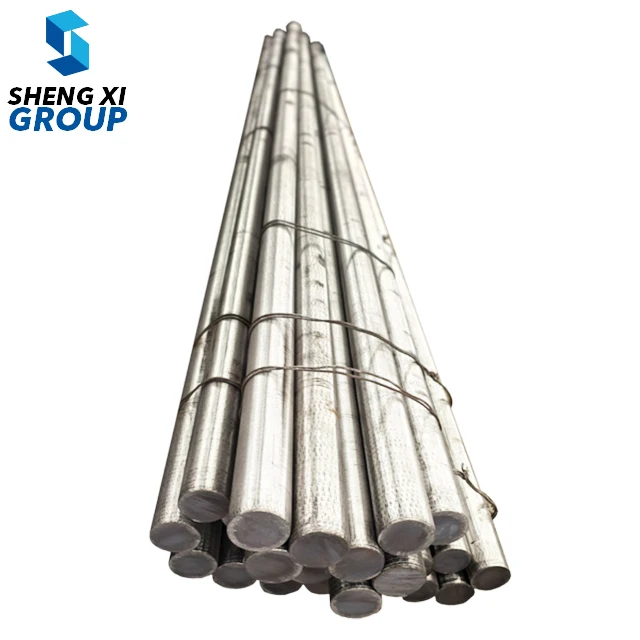
SAE 4340 Steel: High-Strength Alloy Steel for Aerospace, Automotive & Industrial Applications

All Categories

sae 4340

SAE 4340 steel represents one of the most versatile and widely used alloy steels in modern engineering applications. This chromium-nickel-molybdenum alloy steel belongs to the AISI 4340 family and delivers exceptional mechanical properties that make it indispensable across multiple industries. The steel contains approximately 0.40% carbon, 1.85% nickel, 0.80% chromium, and 0.25% molybdenum, creating a unique combination that provides outstanding strength, toughness, and hardenability. SAE 4340 steel functions primarily as a structural material where high strength-to-weight ratios are critical. Its main technological features include excellent deep hardening capabilities, superior fatigue resistance, and remarkable impact strength even at low temperatures. The steel can achieve tensile strengths exceeding 180,000 psi when properly heat treated, while maintaining good ductility and fracture toughness. This combination makes SAE 4340 steel particularly valuable in applications requiring both strength and reliability under dynamic loading conditions. The steel's microstructure can be precisely controlled through heat treatment processes, allowing engineers to tailor properties for specific applications. Typical heat treatment involves austenitizing at temperatures around 1550°F, followed by oil quenching and tempering at temperatures between 400°F and 1200°F depending on desired hardness levels. SAE 4340 steel finds extensive applications in aerospace components including landing gear, engine mounts, and structural frames where weight reduction without compromising strength is paramount. Automotive applications include crankshafts, axles, gears, and connecting rods where cyclic loading demands exceptional fatigue resistance. Industrial machinery utilizes SAE 4340 steel for heavy-duty shafts, pressure vessels, and tooling applications. Military and defense sectors rely on this steel for weapon systems, armor components, and critical structural elements. Oil and gas industries employ SAE 4340 steel in drilling equipment, wellhead components, and high-pressure piping systems where corrosion resistance and mechanical integrity are essential for safe operations.

New Products

SAE 4340 steel offers numerous practical benefits that directly translate into cost savings and improved performance for customers across various industries. The primary advantage lies in its exceptional strength-to-weight ratio, which allows engineers to design lighter components without sacrificing structural integrity. This weight reduction capability becomes particularly valuable in aerospace and automotive applications where fuel efficiency directly impacts operational costs. Customers can expect significant material savings as smaller cross-sections achieve the same load-bearing capacity as larger sections made from conventional steels. The superior hardenability of SAE 4340 steel enables uniform hardness throughout thick sections, eliminating the need for complex heat treatment procedures or multiple material grades. This characteristic reduces manufacturing complexity and associated costs while ensuring consistent mechanical properties across entire components. Manufacturing flexibility represents another key advantage as SAE 4340 steel responds well to various machining, welding, and forming operations. The steel maintains dimensional stability during processing, reducing scrap rates and improving production efficiency. Customers benefit from predictable manufacturing outcomes and reduced quality control requirements. Long-term durability advantages include exceptional fatigue resistance, which extends component service life significantly compared to standard carbon steels. This longevity reduces replacement frequency, minimizing downtime and maintenance costs. The steel's impact toughness remains stable across wide temperature ranges, ensuring reliable performance in extreme environments from arctic conditions to high-temperature industrial processes. Corrosion resistance, while moderate, surpasses that of plain carbon steels, reducing protective coating requirements in many applications. Economic advantages extend to inventory management as SAE 4340 steel's versatility allows consolidation of multiple material grades into a single specification. This consolidation reduces inventory carrying costs and simplifies procurement processes. The steel's widespread availability ensures competitive pricing and reliable supply chains, protecting customers from material shortages. Processing advantages include excellent machinability in the annealed condition, allowing efficient rough machining before final heat treatment. This capability enables near-net-shape manufacturing, reducing material waste and machining time. Post-heat treatment machining remains feasible for finishing operations, providing design flexibility for complex geometries. Weldability characteristics permit joining operations using standard procedures, enabling fabrication of large assemblies. Quality advantages stem from the steel's consistent chemical composition and well-established heat treatment responses, ensuring reproducible mechanical properties batch after batch.

Latest News

Application of Different Types of Mould Steel

08

Jul

Application of Different Types of Mould Steel

Introduction to Mould Steel Fundamentals Mould steel stands out as one of those essential materials found throughout manufacturing sectors where it plays a key part in making all sorts of molds and dies. What makes this stuff special? Well, manufac...
View More
Types and Applications of Special Steel

08

Jul

Types and Applications of Special Steel

Understanding Special Steel Fundamentals Special steel stands out in industries where strength and lasting power matter most. What makes it different from regular steel? Well, manufacturers design special steel for particular jobs, giving it qualit...
View More
Why High Speed Steel Is Essential for Cutting Tools

27

Aug

Why High Speed Steel Is Essential for Cutting Tools

The Revolutionary Impact of High Speed Steel in Modern Manufacturing In the realm of industrial manufacturing and metalworking, high speed steel has established itself as an indispensable material that revolutionized the way we approach cutting opera...
View More
How to select appropriate high-temperature alloys

22

Sep

How to select appropriate high-temperature alloys

Understanding the Critical Role of Heat-Resistant Materials in Modern Industry High-temperature alloys represent a crucial category of engineering materials that enable numerous industrial processes and applications where standard metals would fail. ...
View More

Get a Free Quote

Our representative will contact you soon.
Email
Name
Company Name
Message
0/1000

sae 4340

Exceptional Deep Hardening Capabilities for Uniform Performance

Exceptional Deep Hardening Capabilities for Uniform Performance

The deep hardening capability of SAE 4340 steel represents a revolutionary advancement in metallurgical engineering that delivers unmatched performance consistency throughout component cross-sections. Unlike conventional steels that exhibit significant property variations between surface and core regions, SAE 4340 steel achieves uniform hardness penetration to depths exceeding four inches when properly heat treated. This remarkable characteristic results from the synergistic effects of chromium, nickel, and molybdenum alloying elements that dramatically increase hardenability while maintaining excellent toughness properties. The practical implications for customers are profound, as this uniform hardening eliminates the need for complex case hardening processes or expensive alloy additions typically required to achieve similar performance levels. Manufacturing operations become significantly more predictable and cost-effective when components exhibit consistent properties throughout their geometry. Engineers can design with confidence, knowing that critical stress concentrations will not develop due to hardness gradients that plague conventional materials. The deep hardening capability particularly benefits large shaft applications, thick-walled pressure vessels, and heavy-duty machinery components where core properties traditionally compromise overall performance. Customers experience reduced failure rates, extended service intervals, and improved safety factors when specifying SAE 4340 steel for demanding applications. Quality control procedures become streamlined as hardness testing at various depths yields consistent results, eliminating the uncertainty associated with case-hardened alternatives. This consistency translates directly into reduced inspection costs and improved manufacturing efficiency. The steel's ability to maintain uniform properties also enables optimized component designs that fully utilize material capabilities rather than designing around property variations. Heat treatment flexibility increases dramatically as processors can select from various quenching media and tempering temperatures while maintaining predictable outcomes throughout component thickness. This flexibility allows customization of mechanical properties to match specific application requirements without compromising uniformity. Long-term performance advantages include superior fatigue resistance throughout component cross-sections, as stress concentrations caused by property gradients are eliminated. Component reliability increases substantially when material properties remain consistent under varying load conditions and operating environments.
Outstanding Fatigue Resistance for Extended Service Life

Outstanding Fatigue Resistance for Extended Service Life

SAE 4340 steel exhibits exceptional fatigue resistance that significantly outperforms conventional carbon steels and many competing alloy steels under cyclic loading conditions. This superior fatigue performance stems from the steel's refined microstructure achieved through controlled alloying and optimized heat treatment procedures. The combination of tempered martensite and fine carbide distribution creates an ideal microstructural arrangement that effectively resists crack initiation and propagation under repeated stress applications. Customers benefit tremendously from this enhanced fatigue resistance through extended component service life, reduced maintenance requirements, and improved operational reliability. Industries such as aerospace, automotive, and heavy machinery particularly value this characteristic as their applications involve millions of stress cycles throughout component lifetimes. The fatigue strength of properly heat-treated SAE 4340 steel typically ranges from 85,000 to 120,000 psi depending on surface finish and environmental conditions, representing a 50-100% improvement over standard carbon steels. This performance advantage directly translates into lighter component designs, reduced material usage, and lower overall system weight. Manufacturing advantages include the ability to design components with higher stress levels while maintaining adequate safety factors, enabling more compact and efficient machinery designs. The steel's fatigue resistance remains stable across wide temperature ranges, ensuring consistent performance in applications experiencing thermal cycling. Surface finish effects become less critical compared to conventional steels, as SAE 4340 steel maintains excellent fatigue properties even with moderate surface roughness levels. This characteristic reduces finishing requirements and associated manufacturing costs while maintaining performance standards. Stress concentration sensitivity decreases significantly due to the steel's tough microstructure, allowing designers greater freedom in component geometry without compromising fatigue life. Notch sensitivity improvements mean that unavoidable design features such as keyways, threads, and geometric transitions have reduced impact on overall component durability. Long-term economic benefits include substantial reductions in spare parts inventory, decreased downtime for component replacement, and improved equipment availability. Maintenance scheduling becomes more predictable as component failure modes shift from fatigue-related issues to other wear mechanisms with longer service intervals. Quality assurance programs benefit from the steel's consistent fatigue performance, reducing the need for extensive fatigue testing during component qualification processes.
Versatile Heat Treatment Response for Customized Properties

Versatile Heat Treatment Response for Customized Properties

The versatile heat treatment response of SAE 4340 steel provides customers with unprecedented flexibility to tailor mechanical properties for specific application requirements. This adaptability results from the steel's carefully balanced alloy composition that responds predictably to various thermal processing parameters. Engineers can achieve hardness levels ranging from 25 HRC in the annealed condition to over 58 HRC when fully hardened and lightly tempered, while maintaining excellent toughness properties throughout this range. The steel's heat treatment flexibility allows optimization of strength, ductility, and toughness combinations that would be impossible with single-property materials. Customers benefit from this versatility through reduced inventory requirements, as one material specification can satisfy multiple application demands through appropriate heat treatment selection. Processing advantages include the ability to rough machine components in the annealed condition for efficient material removal, followed by heat treatment to achieve final properties and finish machining for dimensional accuracy. This processing sequence minimizes tool wear, reduces machining time, and improves surface finish quality compared to machining fully hardened materials. The steel's response to various quenching media allows processors to select optimal cooling rates based on component geometry and desired property distribution. Oil quenching provides moderate cooling rates suitable for complex geometries where distortion must be minimized, while water quenching achieves maximum hardness for applications requiring ultimate strength. Tempering flexibility enables precise property adjustment after hardening, allowing fine-tuning of strength-toughness balance to match service requirements. Temperature control during tempering provides customers with the ability to achieve specific hardness levels within tight tolerances, ensuring consistent component performance across production lots. Double tempering procedures can be employed for critical applications requiring maximum stability and stress relief. The steel's thermal stability during tempering operations prevents significant property changes during moderate temperature exposure in service, maintaining design properties throughout component life. Stress relief capabilities allow removal of residual stresses from machining and forming operations without significant property degradation. This characteristic enables complex component geometries that would be prone to distortion in less stable materials. Heat treatment reproducibility ensures that components processed using established parameters will exhibit consistent properties batch after batch, reducing quality control requirements and improving manufacturing predictability.
SAE 4340 Steel: High-Strength Alloy Steel for Aerospace, Automotive & Industrial Applications

Get a Free Quote

Our representative will contact you soon.
Email
Name
Company Name
Message
0/1000